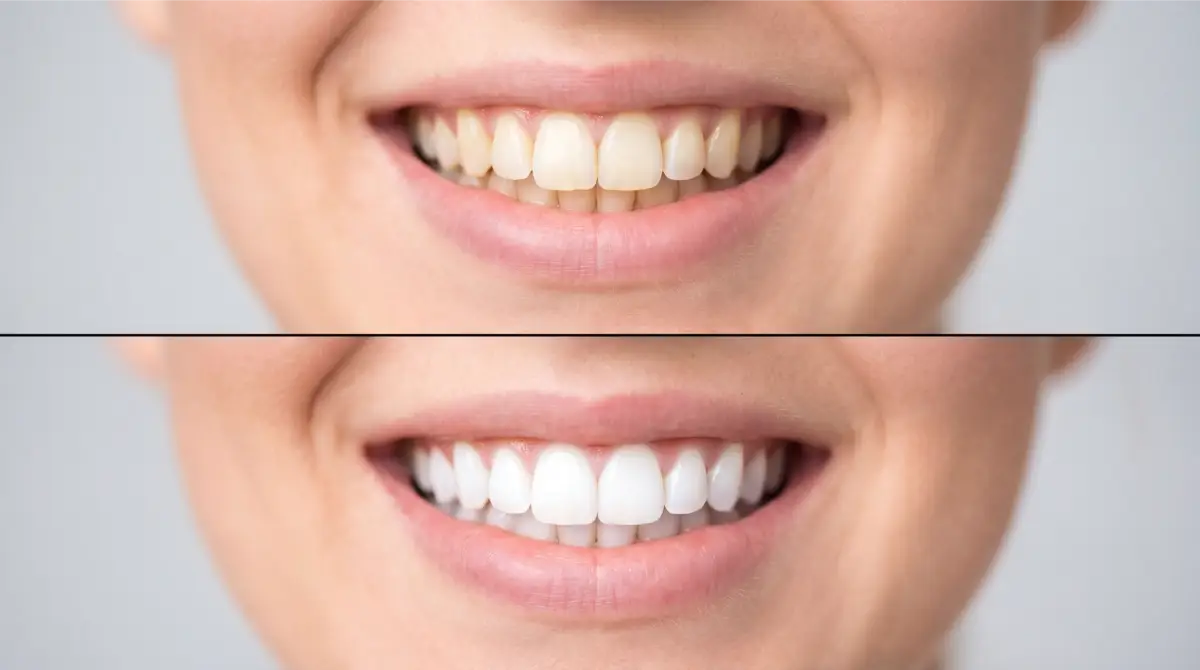
If you’ve ever felt self-conscious about the colour of your teeth that you see in the mirror, take heart; you’re far from being alone. Yellow teeth are one of the most common dental concerns, and in most cases, the causes are understood and treatable. This guide explains its causes, how to prevent stains, and which teeth whitening treatments can give you the results you’re after.
What’s a “Normal” Tooth Colour
| Normal Range | Potentially Concerning |
| Ivory, cream, pale yellow | Dark brown or orange patches |
| Uniform shade across teeth | Gray or black spots |
| Gradual, even changes | Sudden color shift in one tooth |
If yellowing is even and painless, it’s usually cosmetic. However, a sudden colour change, pain, or sensitivity when eating or drinking can point to tooth decay, infection, or another overall health or dental problem and should be checked by a dentist.
Genetics, Aging, and Tooth Enamel Wear Can Make Teeth Look Yellow
Some people naturally have more yellowish teeth even with excellent oral hygiene. Genetics influence enamel thickness and translucency, as well as the natural colour of dentin. If your tooth enamel is thinner or more translucent, more of that yellow dentin shows through.
Conditions such as amelogenesis imperfecta or dentinogenesis imperfecta can cause significant yellow or brown discoloration from childhood and may require specialist treatment.
Age also changes tooth colour. As tooth enamel gradually wears down from chewing, brushing, clenching, and exposure to acids, more yellow dentin becomes visible.

Everyday Stain Triggers: Food, Drinks, and Habits
External stains are among the most changeable causes of yellow teeth. Frequent exposure to dark or highly pigmented foods and drinks can gradually stain enamel.
Common stain triggers include:
- Coffee, tea, cola, energy and sports drinks
- Red or white wine and dark juices such as grape or cranberry
- Certain foods like tomatoes, curry, turmeric, soy sauce and balsamic vinegar can stain teeth.
- Berries, beetroot and dark chocolate
- Smoking, vaping and other tobacco products
You don’t necessarily need to eliminate these foods and drinks. Instead, reduce how frequently your teeth are exposed to them.
Simple ways to reduce stains:
- Use a straw for drinks that stain.
- Rinse your mouth with water after eating or drinking.
- Wait around 30 minutes before brushing after acidic foods or drinks.
- Chew sugar-free gum to stimulate saliva.
Smoking, Nicotine, Vaping, and Other Tobacco: Deep Yellow Hue and Brown Stains
Tobacco can cause particularly noticeable yellow and brown stains. Nicotine oxidises and contributes to a sticky buildup that can darken from yellow to brown over time. Stains are often more concentrated around the gum line, between teeth, and on difficult-to-clean surfaces.
More importantly, tobacco increases the risk of gum disease, bad breath, tooth loss, and oral cancer. Quitting prevents further staining and makes professional cleaning and whitening more effective.
Medical, Developmental, and Trauma-Related Causes of Yellow Teeth
Some yellow teeth causes originate inside the tooth and may be related to childhood exposure, medication, or trauma.
- Tetracycline and doxycycline staining can cause stubborn yellow-brown or grey bands, and occur when certain antibiotics affect developing teeth during pregnancy or childhood.
- Dental fluorosis can cause white flecks and, in more severe cases, yellow or brown patches. Long-term use of some medications can also contribute to tooth discoloration.
- Trauma is another important cause. A tooth that has been knocked can turn yellow, brown or grey over weeks or months. A sudden colour change in one tooth should always be assessed by a dentist.
- Bruxism, or grinding and clenching, can also wear down teeth, create microfractures and make them more likely to get stained.
Keeping Yellow Teeth at Bay with Everyday Habits
Daily oral care plays a major role in tooth colour and overall dental health. Prevention can also reduce the need for repeated whitening treatments.
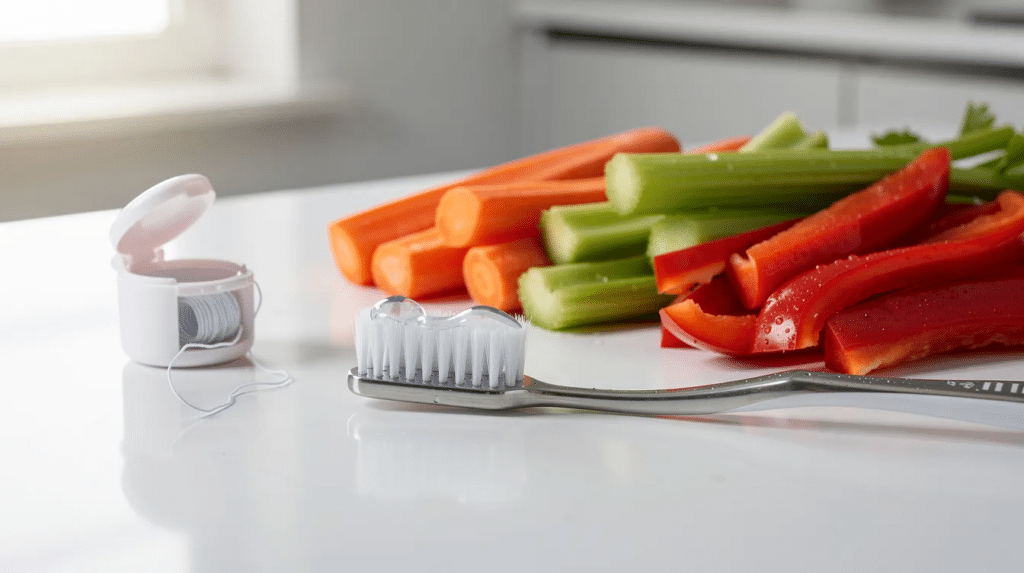
Brush twice a day for two minutes with a soft-bristled toothbrush and fluoride toothpaste, avoiding aggressive scrubbing that can contribute to enamel wear and gum recession. Floss, use a mouthwash, or use another interdental cleaner once a day to remove plaque and pigments between the teeth.
A tooth-friendly diet can also help:
- Crunchy fruits and vegetables can stimulate saliva and help remove debris.
- Dairy products provide nutrients that support enamel.
- Water helps wash away food particles and bacteria.
These habits help limit plaque, tartar, gingivitis, and cavities. Oil pulling may be an optional addition, but it shouldn’t replace brushing and flossing.
Fixing Yellow Teeth with Professional Dental Treatments
If you’re serious about treating yellow teeth, professional treatment is usually the safest and most predictable starting point. The right option depends on whether the discoloration is caused by surface stains, natural dentin colour, medication, fluorosis, trauma, or another dental condition.
1. Dental Checkup and Professional Cleaning
Before whitening, your dentist should examine your teeth and gums to identify cavities, gum disease, damaged teeth, restorations, or internal discoloration. This is particularly important if one tooth has suddenly changed colour or you have pain or sensitivity.
A professional scaling and polishing treatment removes hardened tartar and surface stains that brushing cannot remove. For some people, this alone makes the smile look noticeably cleaner and brighter without bleaching.
2. In-Office Teeth Whitening
For faster and more dramatic results, professional teeth whitening performed in a dental office uses a high-concentration peroxide whitening agent to break down stains within the enamel. Depending on the type of discoloration, in-office whitening can make teeth lighter, often within a single appointment.
3. Professional At-Home Whitening Kits
If you prefer a gradual approach, an at-home teeth whitening can be an excellent option. Your dentist provides a kit that can come in the form of strips, a gel, or a mouthguard-shaped tray that is generally worn for a set amount of time each day over several days or weeks.
Depending on the tooth and the severity of the discoloration, your dentist may recommend dental bonding, enamel microabrasion, veneers, or crowns. These treatments can cover or reshape teeth when bleaching alone cannot produce the desired result.
With proper maintenance, professional teeth whitening results can last around 6 to 24 months, although the exact duration depends on your diet, oral hygiene, tobacco use, and how frequently you need touch-ups.
Whitening Yellow Teeth at Home For A Few Weeks and Staying Safe
Over-the-counter whitening products such as strips, pens, gels and prefilled trays can help with mild surface staining when used correctly.
- Whitening strips: Often contain peroxide and may lighten teeth by around one to three shades over one to three weeks.
- Paint-on pens: Use a lower-dose whitening agent and may provide modest brightening over several weeks.
- Prefilled trays: Usually contain carbamide peroxide and can gradually lighten teeth.
- LED kits: May provide some additional benefit when used with whitening gel, although the light itself isn’t necessarily responsible for major whitening.
- Baking soda: Can help remove some surface stains but may become abrasive if overused.
- Hydrogen peroxide: Can irritate the gums and tissues if used incorrectly, so household DIY applications aren’t recommended.
- Apple cider vinegar: Its acidity can erode enamel and should not be used as a whitening treatment. If used, Apple cider vinegar should be diluted to protect tooth enamel.
- Charcoal toothpaste: Evidence for meaningful whitening is limited, and some products can be abrasive.
Cosmetic Yellowing vs Oral Health Problem
There’s an important difference between naturally yellow teeth and discoloration caused by an underlying problem.
Cosmetic yellowing is usually gradual, relatively even, and painless. It may be related to genetics, aging, diet, smoking, or natural dentin colour and can often be treated with professional or at-home whitening.
Warning signs include:
- One tooth suddenly becomes yellow, brown or grey.
- You notice cracks or obvious changes to the tooth surface.
- Your gums bleed regularly.
- You have persistent bad breath.
- Chewing causes pain.
- You experience unexplained hot or cold sensitivity.
These symptoms can indicate cavities, gum disease, infection, enamel erosion, or internal tooth damage. Don’t try to whiten a tooth before finding out what’s causing the discoloration.
Creating a Long-Term Plan To Improve Your Whiter, Healthier Smile
Keeping yellow teeth at bay is a long-term process rather than a one-time fix. Aim for a healthy, natural-looking shade rather than an unrealistic paper-white smile.
A simple maintenance routine includes:
- Brush twice a day with fluoride or a gentle whitening mouthwash and toothpaste.
- Clean between your teeth once a day.
- Limit frequent exposure to dark drinks and highly pigmented foods.
- Drink plenty of water.
- Eat calcium-rich foods and crunchy fruits and vegetables.
- Visit your dentist for regular checkups and professional cleanings.
- Consider professional whitening touch-ups when recommended.
With consistent home care and the right professional treatment, you can reduce stains, protect your enamel, and keep your smile looking brighter for longer.

FAQ
Can I really whiten my teeth at home without damaging them?
Yes, dentist‑approved products are safe if used correctly; misuse can harm enamel.
How long does professional whitening for yellow teeth usually last?
Results last 6–24 months, depending on habits and hygiene.
Do whitening toothpastes actually work on yellow teeth?
They remove surface stains, brighten about one shade, but don’t change dentin color.
Are yellow teeth always a sign of poor oral health?
No: genetics and age cause natural yellowing; disease shows in pain, bleeding, or sudden changes.
Is it safe for teenagers to whiten their yellow teeth?
Mild whitening may be safe after age 16, but only under dentist supervision.