
If you’re a denture wearer and you’re struggling with bad breath that just won’t go away, you’re not alone. Bad breath with dentures is a pretty common affliction, and in most cases, it’s an easy fix. This guide is going to give you the answer to “do dentures cause bad breath?”, and teach you how to keep them clean and fresh, and when it’s time to call in the professionals.
The thing is, dentures themselves don’t cause bad breath; it’s usually the stuff that gets stuck underneath them, or the bacteria that builds up over time. Food particles getting trapped, plaque forming, bacteria running wild, and dry mouth create the perfect environment for a bad breath problem.
- Doing a good daily, deep clean and some basic oral hygiene will usually sort out bad denture breath.
- If you don’t clean your dentures properly, you can bet your bottom dollar that bacteria are going to start to accumulate.
- And if you’ve got bad breath that just won’t budge despite your best efforts at cleaning, then it might be time to get a dentist to have a look: it could be a sign of gum disease, an infection, or some other oral health issues.

Do Dentures Really Cause Bad Breath?
People often ask if artificial teeth can really cause bad breath, and the answer is yes, just like with natural teeth. Bacteria break down the food you eat and produce a load of bad-smelling chemicals that give off a foul odor. Now, dentures don’t have to smell; it’s just a matter of poor oral hygiene getting in the way.
The main culprits behind bad breath with dentures are food getting stuck under your denture, plaque forming on the surface, not giving your gums a chance to rest by wearing your dentures 24/7, and dehydration, which means your salivary glands aren’t doing their job to keep the place clean.
You might find yourself wondering, “My dentures smell bad even after I brush them.” This can happen if harmful bacteria have taken up residence in the tiny little pores in the acrylic or just in the bits that are hard to get to with a brush. And FYI, cigarette smoke, coffee, and foods with strong colours can all get absorbed into the acrylic and give off a stale odour. All this can also encourage yeast to overgrow and cause bad breath and a nasty taste.
But the good news is, most denture odours are reversible, and you can get them sorted with a bit more attention to your cleaning routine and some help from the professionals.
Most Common Causes of Bad Breath With Dentures
First things first, you need to figure out what’s causing your bad breath before you can start to fix it.
Poor Denture Cleaning
Not brushing your dentures daily, just giving them a rinse, or skipping the overnight soak altogether- all these things can let plaque and bacteria accumulate. Which over time can produce a pretty nasty smell. A review found that giving your dentures a good clean with a mixture of chemical soaking and brushing was far more effective at getting rid of bacteria than just rinsing them.
Food Trapped Under Dentures And Ill-Fitting Dentures
When food particles get stuck under your dentures, especially with partial dentures with clasps or full dentures that don’t fit so great, you can end up with a load of bacteria getting trapped and multiplying out of control. Overapplying denture adhesive can do the same thing.
And if your dentures are ill-fitting, they can rub up against your gums and cause all sorts of irritation, which can contribute to bad breath. Or food can get trapped against the roof of your mouth or under a loose denture base, another common oversight.
Dry Mouth
A dry mouth is a major risk factor for bad breath in denture wearers; saliva helps keep everything clean and under control, and when it dries up, bacteria can start to run amok.
A lot of prescription drugs can reduce saliva production, and so can aging, for that matter. Common symptoms include a sticky mouth, difficulty eating dry foods, and waking up at night needing a drink.
Other Non-Denture Causes
And don’t think that bad breath is always going to be the fault of your dentures; sinus infections, tonsil stones, acid reflux, uncontrolled diabetes, smoking, and heavy drinking can all cause bad breath too. So if your breath smell persists after you’ve sorted out your denture cleaning routine, it’s worth getting a dentist or doctor to take a look.
How to Keep Dentures Clean And Fight Denture Odors
A consistent cleaning routine is key to keeping your dentures fresh and preventing bad breath.
Daily Denture Cleaning Routine
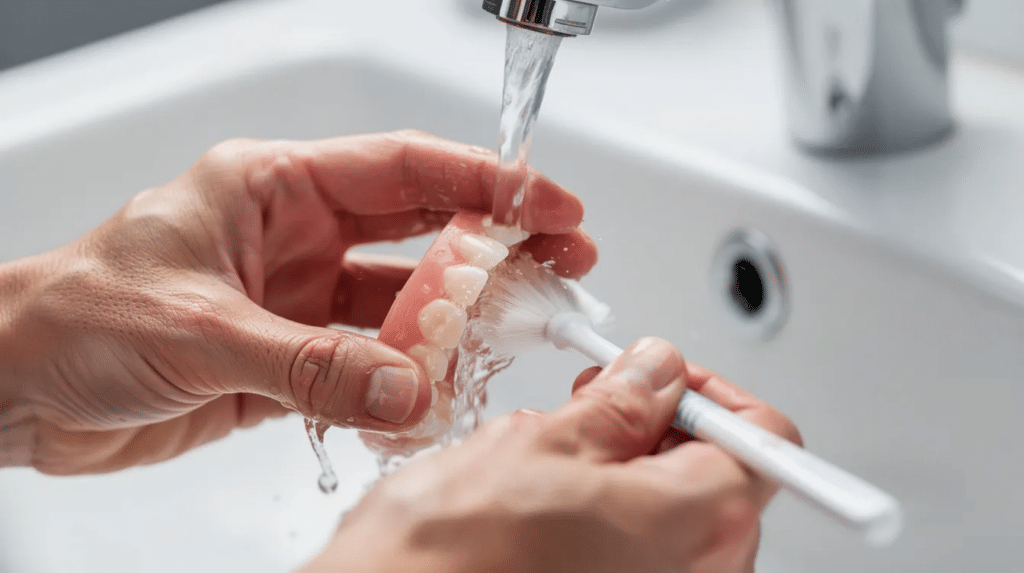
- Get into the habit of removing them after meals, rinsing under the tap, and giving them a gentle brush with a soft-bristled denture brush.
- Use a non-abrasive denture cleaner rather than regular toothpaste; it can scratch the acrylic and create grooves where bacteria can thrive.
- Clean every surface, including the top, underside, and clasps on partial dentures.
- Give your dentures a rinse after meals to get rid of food bits before they harden.
- Use denture cleansers as directed; they can get rid of up to 99.9% of bad breath-causing bacteria when used right.
Daily cleaning and good oral hygiene are the key to preventing bad breath.
Soaking at Night
Get into the habit of removing your dentures at night and giving them at least 6-8 hours to rest. Then soak the dentures overnight in a denture tablet dissolved in warm, running water or another recommended cleaning solution. A study of complete denture wearers has found that those who wear dentures to bed have roughly 3.4 times the chance of getting bad breath compared to those who take them out at night.
Never use hot or boiling water when you clean dentures, as this can make the acrylic warp, cause the fit to change, and leave spaces where food gets stuck.
Keeping the Mouth Itself Fresh
People with full dentures still need to clean their mouths. Brush your gums, tongue, and cheeks a couple of times a day using a soft-bristled brush to get rid of biofilm. An alcohol-free mouthwash can help remove food particles and any bacteria that might be lingering, although be careful not to make dry mouth any worse. Giving your gums a bit of a massage can also get the blood flowing and help them stay healthy.
Specialised Tools
- Ultrasonic denture cleaners use sound waves to get into all the tiny nooks & crannies that a regular brush can’t reach. A 2025 systematic review found that using an ultrasonic cleaner in combination with a chemical cleanser is much more effective than other methods for reducing plaque and the amount of bad bacteria.
- Before using bleach-based or whitening products, you should check with your dentist first because some of them can damage the metal frameworks or soft liners in your dentures.
Do your denture cleaning every day & don’t forget to do a good job of your general oral hygiene too; that way you should stay on top of bad breath and keep your dentures in good nick.
Preventing Dry Mouth and Other Long-Term Solutions To Avoid Bad Breath
Managing dry mouth goes hand-in-hand with getting rid of bad breath because it’s the perfect breeding ground for the bacteria that cause the smell.
Practical Ways to Reduce Dry Mouth
- Swallow a bit of water throughout the day, particularly with meals, to keep your mouth moist.
- Chew some sugar-free gum or use a sugar-free lozenge to get those glands working & get some saliva to your mouth.
- Try to avoid tobacco, too much caffeine & alcohol; all these things can dry out your mouth & make your mouth smell worse.
Medical and Product-Based Help
- You can get over-the-counter saliva substitutes, moisturising gels & sprays to help out.
- If your medication is giving you really dry mouth, you should talk to your doctor about whether there’s an alternative medication or if you can just take a bit less of it.
Proper Denture Fit
If your dentures are loose or moving about, it creates spaces where food & bacteria can accumulate. Signs that you might need to get your dentures relined or replaced include sore spots, a clicking sensation when you’re chewing, difficulty eating, or if your dentures just suddenly smell like a bin.
Getting your denture fit sorted as soon as you can is key rather than relying on some sticky denture adhesive to hold things together.
Regular Dental Checkups
Even if you have full dentures, you still really need to see a dentist at least once a year. Regular checkups help a dentist assess your denture fit, figure out if there’s any buildup of bacteria, and catch any problems like denture stomatitis, oral cancer & gum disease right before they become serious.
Book an appointment sooner if bad breath just won’t go away after a couple of weeks of good denture care; a persisting odor could mean that there’s something going on that needs to be treated.
By doing your denture cleaning regularly, looking after your mouth, getting your denture fit sorted & getting guidance from a dentist, you can prevent bad breath with dentures & feel happy to flash a smile.

FAQ
How do I even know if my dentures are the cause of bad breath?
Just give them a sniff; if they still smell all over the place, they probably need a good clean or replacing.
Is it normal for new dentures to smell for a bit?
No, only a mild plastic smell that fades over time. If your dentures smell like a bin, it’s a sign that something is trapped in there.
Can I just use regular toothpaste to clean my dentures?
No way, it’s too harsh. Stick to denture cleanser and a soft toothbrush.
Do I really have to take my dentures out at night?
Yes, you should take them out for at least 6-8 hours a day; it’s the best way to keep them fresh, prevent infection & sore gums.