Dental implants are one of the best solutions for filling in missing teeth, but they do need regular care to survive, just like your own teeth. If you want to get the most out of your implants, you’ve got to put in the effort to keep them clean and healthy. Good dental implant maintenance is the best way to protect your investment, prevent problems, and keep them looking and feeling great for decades to come.
Here’s the lowdown from the experts:
- With proper care and excellent oral hygiene, a modern dental implant can easily last you 15-25 years or more, which is even longer than some of the best cared-for natural teeth out there.
- The overwhelming majority of implant problems, including peri-implantitis, inflammation of the surrounding tissues, and even implant failure, start with a buildup of plaque and poor tooth hygiene, rather than a problem with the implant itself.
- Effective home implant care is pretty simple: brush your teeth at least twice a day with a soft-bristled brush, use interdental brushes or dental floss to clean between your teeth, and rinse with an alcohol-free mouthwash.
- Lifestyle habits like smoking, eating a bad diet, and grinding your teeth at night all have a big impact on the long-term health of your implants.

Why Dental Implant Maintenance Matters As Much As Looking After Your Natural Teeth?
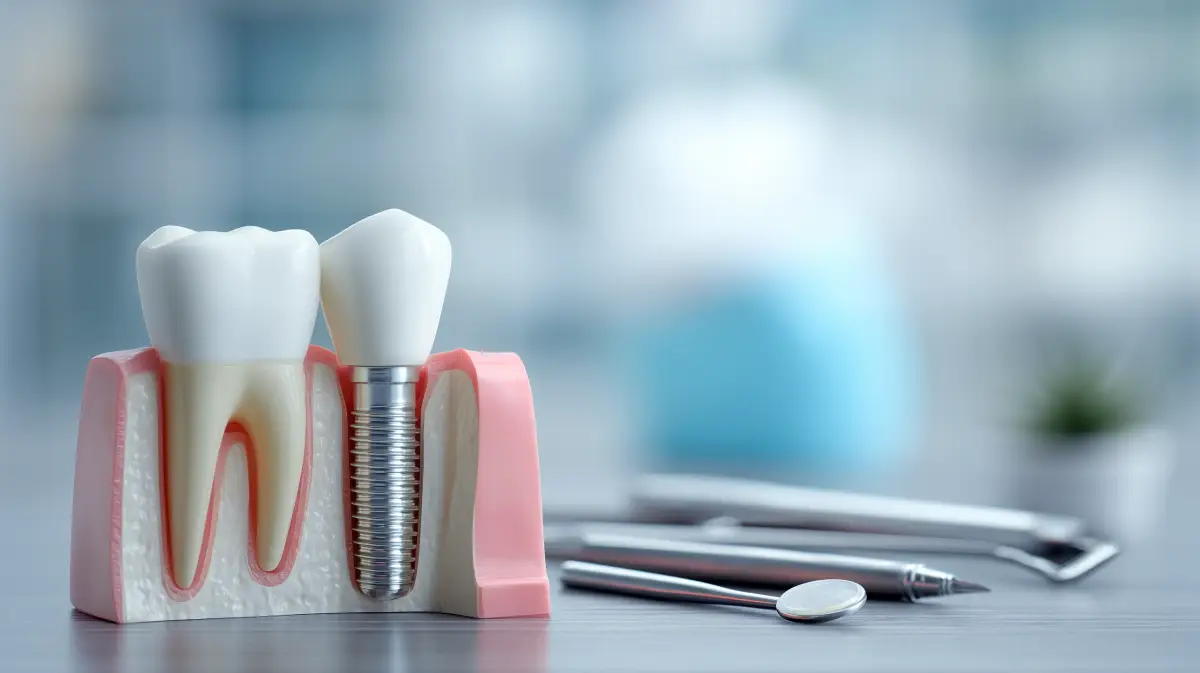
Dental implants are designed to replace missing teeth and can function for decades when properly cared for. A full dental implant system includes the implant post anchored in the jawbone, the connecting piece, and the visible crown or bridge. However, the gums and bone around the implant remain living tissue that can become inflamed or infected.
When plaque builds up along the gum line, it can trigger peri-implant mucositis, affecting about 63% of implant patients. If left untreated, it can progress to peri-implantitis, causing bone loss and potentially implant failure. Around a quarter of patients eventually develop peri-implantitis, making it a major biological cause of implant failure.
Dental implants need regular cleanings just like natural teeth. With a single implant costing several thousand dollars and a full-arch restoration considerably more, good implant care protects your overall oral health and investment. It also helps maintain a stable bite, protect remaining natural teeth, and support comfortable chewing and speech.
Understanding Your Dental Implant Treatment: Components and Healing Process
Knowing how your dental implant is put together helps you keep it clean and healthy. It consists of three main parts:
- The implant post: This is a titanium or zirconia post that gets surgically implanted into the jawbone, acting as an artificial root.
- The abutment: This is the bit that attaches the implant post to the visible part of the implant restoration.
- The crown, bridge, or full-arch prosthesis: This is the part you chew with or see.
Once your implant is in place, osseointegration kicks in. This is the process where the implant fuses with the jawbone, usually over a period of 3-6 months, and gives you a stable base for the final restoration.
After surgery, you may feel a bit tender and swollen for the first 2-8 recovery weeks, so you’ll need to treat your implant with a bit of care. You can expect to avoid tough or hard foods for a while, keep your mouth clean with the right equipment, not bite down too hard on it, and let it heal without any interruptions.
Brushing, Mouth Rinses and Using Dental Floss: Consistent Care Routine At Home for Your Dental Implants
Just like natural teeth, dental implants need regular care to stay healthy. Daily dental implant hygiene should be part of your daily routine, with extra attention to the gum line and spaces around prosthetic teeth.
Brushing: Brush at least twice a day (in the morning after breakfast and before going to sleep at night) for two minutes using a soft-bristled brush, electric toothbrush, or interdental brush to remove plaque; angle the bristles toward your gums to disrupt plaque buildup.
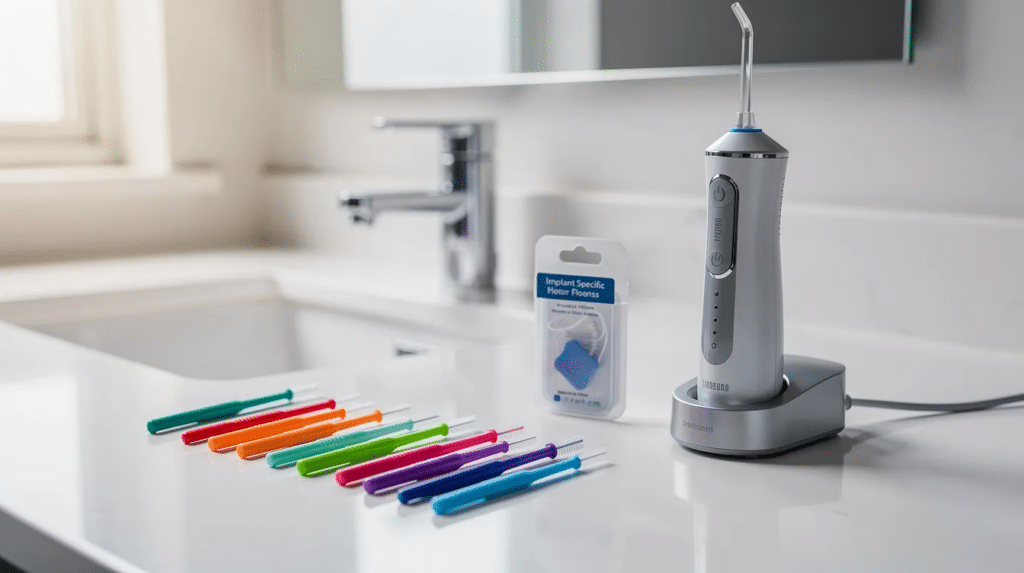
Interdental cleaning: Use waxed dental floss, implant-specific floss, or interdental brushes to remove plaque between your teeth and around your implant.
Rinsing: Use an alcohol-free antimicrobial mouthwash once or twice daily to help control bacteria and inflammation. Mouthwash supports good oral hygiene and helps prevent infection, but cannot replace mechanical cleaning.
Gumline focus: Biofilm commonly builds up where your crown meets the abutment. Gently clean this area with light pressure and avoid abrasive toothpaste that could scratch your restoration.
All-on-X Full-Arch Prostheses: Cleaning under the fixed bridge is crucial. Use super floss, floss threaders, interdental brushes, or a water flosser on low to medium pressure to reach areas that are difficult to access.
Screw-Retained Prostheses: Some restorations can be professionally removed every 12 to 24 months for a deep clean underneath. This complements, but does not replace, daily home care. Ask your dentist what schedule works best for your specific design.
Routine Professional Care: Regular Checkups, Cleanings, and Monitoring
The bottom line is, long-term success depends on both home care and routine dental visits; however, you’ll still need to seek professional care at some point, since your dental team can spot problems that are easy to miss on your own.
Visit Frequency: Cleanings are usually scheduled every three to six months. Healthy patients may need visits every six months, while those with gum disease, peri-implantitis, or other systemic risk factors may need visits every three or four months.
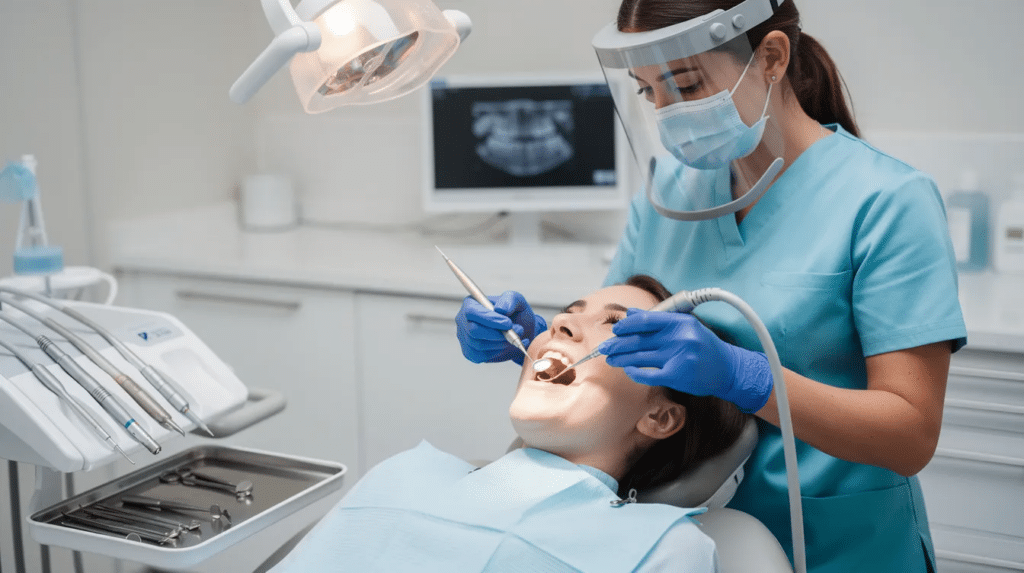
What happens at a visit: Your dentist or hygienist checks gum color, pocket depths, bleeding, infection, crown or abutment stability, bite alignment, and any other adjustments necessary. Regular dental checkups evaluate if there are any other additional procedures necessary and monitor your gum health as well as bone health.
Implant-Safe Professional Cleaning: Your hygienist may use plastic or resin scalers, titanium-tipped instruments, low-abrasive polishing pastes, or an air polisher with special powder to clean around implants without scratching the surface.
Imaging: Periodic X-rays monitor bone levels: usually after placement, after the final restoration, and every 12 to 24 months, or more often if needed. This helps identify early bone loss or implant failure before problems become more serious.
Lifestyle Habits That Protect (or Endanger) Your Implants
The choices you make outside of the oral hygiene routine can really make a difference in how well your bone and gum tissue are working with your implants.
Smoking: Just avoid smoking; it’ll slow healing and pretty much guarantee you’ll have some complications. Nicotine restricts blood flow, and if you can’t get your gums and bone all healed up, you’re more likely to get peri-implantitis. And that can double or triple your chances of implant failure.
Diet: A balanced diet that’s well-stocked with calcium, vitamin D, and protein will help keep your gums and bone healthy. But if you’re having a lot of sugary snacks and acidic drinks, you’re basically asking for plaque and gum inflammation. And just generally, if you’re not getting rid of all that extra food in your mouth, it’s just going to attract bacteria and lead to problems.
Mechanical Overload: Just be careful not to put too much stress on your implants; no biting down on ice, pens, or hard candy, for example. And if you’re one of those people who grinds your teeth at night, get fitted for a night guard.
General Protections: Just keep things in general, moderate drinking, don’t use your teeth as a tool, and keep any systemic conditions like diabetes under control. These habits can either help or hurt the long-term implant stability.
Warning Signs, Complications, and When to Call Your Dentist
Early detection is really key for keeping your implants in good shape. A lot of complications can develop gradually and don’t necessarily hurt right away.
Early Signs to Watch For:
- Bad breath that doesn’t clear up with brushing and good hygiene.
- Bleeding when you brush or floss around the implant
- Puffy, red, or receding gums near the implant
- Sensitivity or discomfort around the outside areas
- A crown that feels like it’s shifted or feels different when you bite down
Peri-implantitis can cause bone loss without any pain at all, until it gets pretty far along, at least. As it starts to get out of control, deeper pockets will form, and it’s only a matter of time before your implant is in trouble.
Signs of implant failure include pain that doesn’t go away and a loose crown or implant. Any visible pus, a foul taste, or a loose crown or implant are pretty critical and should be looked at right away.
Most of these problems can be fixed successfully if you catch them early. Don’t wait until it hurts before calling the dentist.
Long-Term Success: Building a Sustainable Implant Care Routine
Long-term implant success is not about being perfect; it’s about developing a proper maintenance routine that you can really stick to. Brush and floss at the same time every day, so after breakfast or before bed, for example.
Keep your interdental brush or water flosser right by the sink as a reminder. And in the first 30 days after you get your final restoration, you might want to use some reminders on your phone or a habit tracker to help you get into the swing of things.
If you’ve got a complex restoration, like an All-on-X or some other kind of full-mouth implants, it’s worth asking your dentist or hygienist for a custom plan that will work for you, one that covers the tools you should be using, the cleaning techniques that are best, and how often you should be coming in for a checkup.
With proper daily care and regular support from a pro, dental implants can look and feel completely natural for decades. Taking good care of them, though, will protect not just your oral health & confidence, but your investment in that perfect smile.
FAQ
Can dental implants get cavities the way our real teeth do?
No, but the gums around them can get inflamed if plaque builds up… and the natural teeth nearby still carry their own risks, so keeping up with daily cleaning is key.
Will a water flosser on its own be enough for taking care of my implants, or do I still need to be using traditional floss?
Water flossers are super helpful, especially if you’ve got a full set of implants, but traditional floss or interdental brushes are still a must if you want to get rid of the really sticky plaque.
Do I need to start using a new toothbrush or change my toothpaste after I get dental implants?
Just stick to a soft brush & non-abrasive toothpaste, & try to avoid any whitening toothpastes with harsh stuff in them. And remember to replace those brush heads every 3 months.
How long do I have to wait after getting implants before I can get back to my normal oral hygiene routine?
For most people, gentle brushing (but not directly on the implant site) can start as soon as 24 hours after surgery. Then, cleaning around the actual implant will start getting a bit more thorough once the stitches come out, though that’s always up to your dentist to decide.