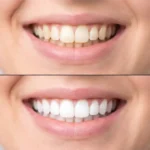
Stained dentures are a common problem, but most of the time a good cleaning routine can sort you out. However, the catch is that dentures just can’t be bleached to a lighter shade like natural teeth. What’s often referred to as “whitening” is actually just removing surface stains and getting them back to their original colour.
In this guide, we’ll tell you everything you need to know so you can stop wondering if “can you whiten dentures at home?”
Your Daily Denture Cleaning Routine
Here are some general denture cleaning tips to keep your full or partial dentures looking their best. You should be:
- Cleaning daily: Use a soft-bristled brush and a non-abrasive denture cleaner along with regular soaking to keep your dentures clean and looking bright
- Home cleaning: You can try using baking soda, white vinegar, or effervescent denture cleaners for mild surface stains, provided you use them correctly
- Avoid damaging them: Don’t use boiling water, undiluted bleach, or natural teeth whitening products, which can warp, discolor, or damage the denture materials.
- Persistent stains: If the stains are really stubborn, you may need to get your dentures professionally cleaned, polished or even replaced
Can You Really Whiten Dentures?
You can’t bleach dentures like you would natural teeth. Whitening toothpaste, peroxide strips, and professional enamel bleaching will not make your denture teeth any lighter, and may even damage them. If you want lighter dentures than you currently have, you’re generally going to need new dentures or implants with lighter crowns.
Why do Dentures stain?
Most modern dentures are made from acrylic resin, while older dentures may have porcelain teeth or metal frameworks. These materials can get clogged up with bits from coffee, wine, tomatoes, berries, and smoking.
There are two types of stains:
- Extrinsic stains: These are surface stains that can be sorted with a bit of gentle brushing and a denture cleaner.
- Intrinsic stains: These are deeper stains that can be harder to get rid of and may need a professional polish or replacement
Cleaning Dentures With a Denture Cleanser at Home
- Rinse them after meals to clear away any food particles
- Brush them gently with a soft brush and non-abrasive denture cleaner (don’t use regular toothpaste)
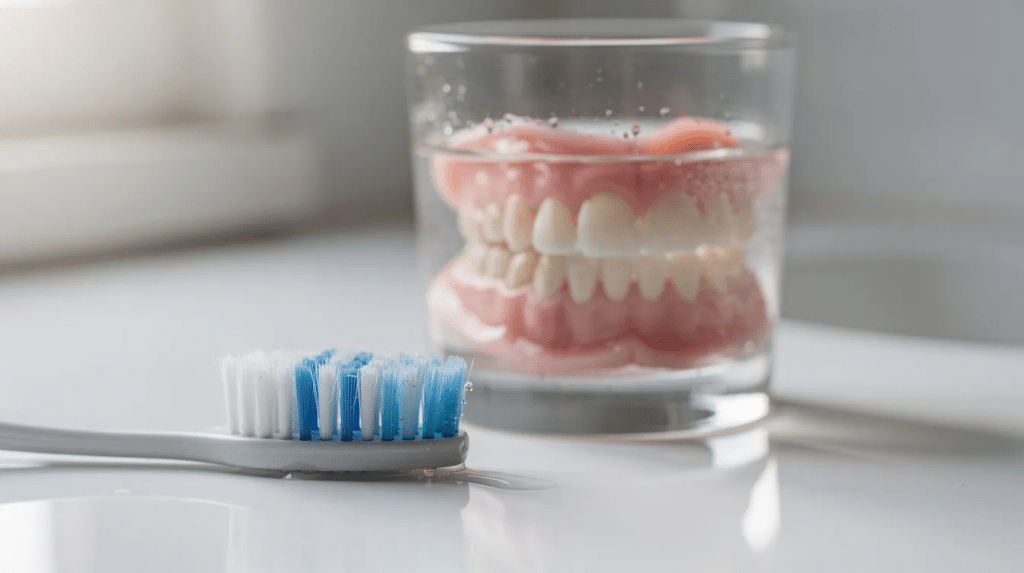
- Soak them overnight in a proper denture cleaning solution or effervescent tablets (just be sure to follow the instructions on the packaging). You can also do shorter soaks of 15–30 minutes to target surface stains.
Baking Soda? Boiling Water? Safe Ways to Brighten Dentures at Home
- Baking soda: Make a paste with water, gently brush it on, and then rinse thoroughly. Use this sparingly for surface stains.
- White vinegar: Mix one part vinegar to two parts water and soak for a few hours to help loosen mineral deposits. Be cautious if your dentures have metal in them, and rinse well afterwards.
- Hydrogen peroxide: A 1:1 mix with warm water can be used for a 15–30 minute soak to help remove stains. Use this with care.
- Effervescent denture cleaners: These can help break down stains and plaque. Just be sure to choose products that are approved by the ADA.
Using Cool Water
Use cool or lukewarm water to clean your dentures; no hot water, as this can warp the acrylic. And always check with your dentist before trying any new cleaning methods, especially if you have older or fragile dentures.
Denture Whitening “Don’ts”
Some DIY methods can cause permanent damage to your dentures or reduce their lifespan.
- Boiling water: Can warp dentures and affect their fit
- Household bleach: Can weaken the materials and discolor the pink acrylic. Don’t use it unless your dentist specifically recommends it
- Natural teeth whitening products: These can damage dentures without whitening them
- Abrasive powders and stiff brushes: Can create scratches that trap stains and bacteria
- Acidic DIY hacks: Don’t try using lemon juice, citric acid, or undiluted vinegar as these can erode the denture surfaces
When to Go To The Dental Office
If you’re struggling to get rid of stains, or if you find your dentures are looking a bit worse for wear, it’s time to see a dentist for a professional cleaning. They can offer:
- Ultrasonic cleaning: This loosens up plaque, calculus, and stains
- In-office polishing: This smooths out the denture surfaces and gets them shining again
You should get your dentures professionally cleaned at least once a year. If your dentures are more than 7-10 years old and no longer fit properly, it may be time to consider relining, rebasing or replacing them. Dental implants with matched crowns are another option.
Preventing Future Denture Stains
It’s a lot easier to prevent stains than it is to keep whitening your dentures. Just clean them daily to prevent plaque and stains from building up.
Daily and Nightly Routine
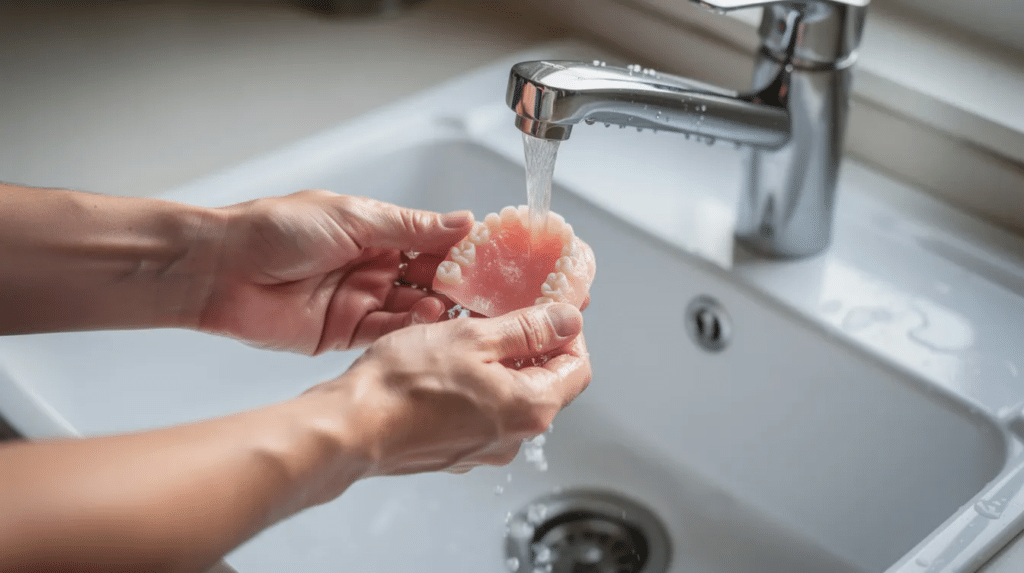
- Give your dentures a rinse after each meal to get rid of any stuck-on food bits.
- Get to work with a soft-bristled toothbrush and denture cleanser at least once or twice a day. Don’t forget to gently clean your gums, tongue, and any remaining natural teeth too.
- Pop your dentures into their solution overnight to stop them getting dry and make them easier to clean in the morning.
Lifestyle Tips to Prevent Stains from Building Up
- Try to limit your intake of drinks that might stain your dentures, like coffee, tea, red wine, dark sodas, and any other foods that are just begging to cause trouble, like curry and tomato sauce.
- Quitting smoking or vaping is another very good idea; tobacco can cause the most stubborn stains imaginable.
Keep going to the dentist for check-ups even if you do have a full set of dentures. Replacing them after 7-10 years or so will generally make them fit better, work better, and look better too. A routine and a bit of pro care will help keep your bright smile looking its best.
FAQ
Can I just use regular toothpaste to clean my dentures?
Don’t; the abrasives in it will scratch your dentures, making them more prone to stains and getting a buildup of plaque. Instead, use a gentle no-abrasive denture cleaner or a mild dish soap with a soft-bristled toothbrush to get the job done.
How often should I let my dentures soak in a cleanser?
Most of the time you can soak your dentures overnight to keep them clean and prevent them from drying out. If you want to get rid of some stubborn stains, you might be able to get away with just soaking them for 15-30 minutes, but it’s always best to follow the instructions on the product label and what your dentist advises.
Will going at your dentures with a whitening product at home get them looking brand new?
Home whitening kits can help get rid of surface stains, but they won’t be able to restore old dentures that have aged badly. The acrylic itself may darken over time, or lose its shine, so you might need to get them polished or replaced by a pro to get that like-new look back.
Is there a way to just remove the stains from the pink part of my dentures?
Yes. Just use a denture cleaner and brush the pink bit gently with a soft-bristled toothbrush. Don’t go too hard with the scrubbing; you could damage it. If the stains persist, it’s possible you might need to get them cleaned professionally, rebase them, or replace them altogether.
Can dentures be colour matched if you later get dental implants or crowns?
In most cases, yes. Dentists have colour guides they can use to match new crowns, bridges, or implants to your existing dentures. If you are planning all these changes, it’s a good idea to discuss the colour beforehand, so that everything looks the same.