
Dentures are one of the most popular ways to replace missing teeth, but you might wonder whether it’s ok to wear dentures overnight. Well, you can wear dentures at night, but dental pros generally advise taking them out once your mouth has healed up from extractions or adjustments.
Going to bed with your dentures on a regular basis ups the risk of multiple dental health issues, like denture stomatitis, gum irritation, and pneumonia in older folks. Plus, you’ll end up wearing out your dentures faster and getting a shorter life out of them.
After you get new dentures or have teeth pulled, you may be told to wear them 24/7 for the first couple of days, but after that it’s generally best to take them out at night.
Keeping your dentures and gums clean with a good oral hygiene routine is key: give them a brush daily, then soak your dentures overnight in a good denture-cleaning solution to keep your mouth healthy and extend the life of your dentures.
So, Can You Sleep With Your Dentures In or Not?
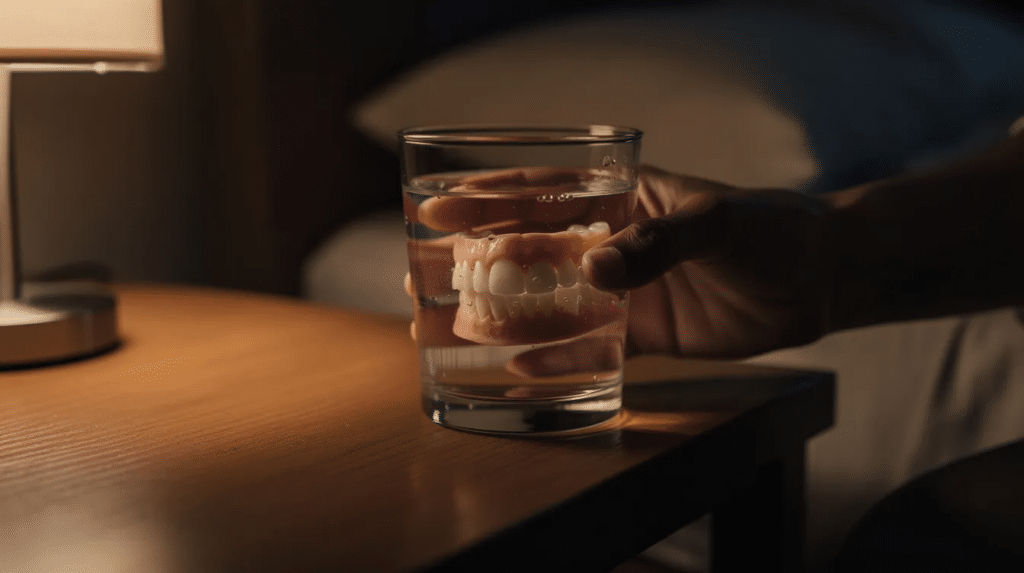
The simple answer is yes, but dentists generally recommend against sleeping with dentures regularly. The NHS recommends removing dentures for at least 6–8 hours a day, usually overnight, to give your gums, soft tissues, and underlying bone a chance to rest.
If you occasionally have to sleep in your dentures, such as while traveling or recovering from an operation, it’s unlikely to cause permanent harm as long as you keep them clean. In some cases, your dentist may also tell you to wear them overnight temporarily.
How Sleeping With Dentures May Be Detrimental For The Oral Health of Denture Wearers
Wearing dentures nonstop puts constant pressure on your gums, which can cause irritation, sore spots, and delayed healing. Sleeping in them can also increase the risk of denture stomatitis, a fungal infection caused by Candida that can grow beneath dentures.
Because saliva production drops during sleep, harmful bacteria, food debris, and yeast can become trapped between your dentures and gums. In older adults, research has also linked overnight denture wear with a higher risk of pneumonia, potentially from inhaling bacteria and fungi from contaminated dentures.
The bottom line: Give your gums a nightly break. Take your dentures out for 6–8 hours, clean them properly, and store them safely overnight.
Risks of Sleeping With Your Dentures Every Night
Going to bed with your dentures on regularly can create a whole heap of health problems that get worse over time. Here are the main risks:
- Gum inflammation and ulcers: Constant friction and pressure can irritate your gums and cause sore spots. Taking dentures out at night gives your gums a chance to recover.
- Bone loss: Wearing dentures 24/7 can contribute to bone loss beneath them, eventually making your dentures loose and uncomfortable.
- Denture stomatitis & thrush: Sleeping in dentures creates a warm, moist environment where Candida can thrive, increasing the risk of fungal infections and gum redness.
- Systemic health problems: Bacteria can build up on dentures overnight and may contribute to respiratory infections. A 2024 study found denture wearers had 27% higher odds of pneumonia.
- Bad breath: Trapped food debris and bacteria can build up on dentures, leading to persistent unpleasant odors.
- Shortened denture lifespan: Regular overnight wear can contribute to faster wear and damage, meaning dentures may need to be relined or replaced sooner.
When Might It Be Okay to Sleep With Dentures? (Some Exceptions)
Taking your dentures out at night is the general rule, but there are a few exceptions where it’s okay to wear them temporarily:
- Immediate dentures after extractions: Your dentist may tell you to keep them in overnight for the first few days. They can act like a band-aid, helping control swelling and keep blood clots in place.
- Specialized dental appliances: Some sleep apnea devices that resemble dentures need to be worn at night and follow different guidelines from regular dentures.
- Occasional comfort: Some people may choose to sleep with dentures for confidence or comfort. If you do, keep up with your cleaning routine and regular dental checkups.
These exceptions are usually short-term or supervised. Long-term nightly denture wear should only be done under the guidance of a dental professional.
How to Care for Your Dentures at Night
When it’s time to put your dentures away, follow these steps:
- Give them a rinse: Take out dentures and rinse them under running water to get rid of any loose debris.
- Brush: Clean all surfaces with a soft-bristled toothbrush and a gentle non-abrasive denture cleaner or soap. Avoid using regular toothpaste, as it can scratch acrylic.
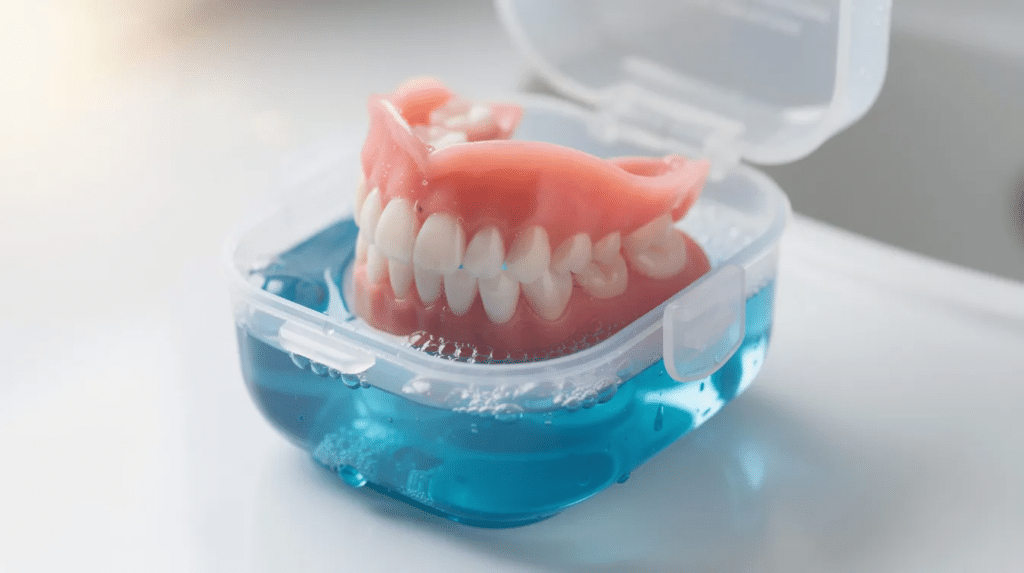
- Soak: Soak dentures in a denture cleaning solution or a bit of lukewarm water overnight, following the product instructions.
- Clean your mouth: Brush your gums, tongue, cheeks, and the roof of your mouth gently to get rid of all that pesky plaque and keep your tissues in good health.
- Take care of your remaining natural teeth: If you wear a partial denture, brush your remaining teeth with fluoride toothpaste and floss carefully; all that helps prevent decay and gum disease.
Be wary of hot water and household cleaners; they can warp or damage your dentures. Removing and cleaning your dentures each night will help reduce that nasty bacteria buildup, gum irritation, and risk of denture stomatitis, while keeping your overall oral health and denture longevity in top shape.
Denture Adhesive, Fit, and Comfort: Daytime vs Nighttime
Denture adhesive is pretty handy during the day, giving you extra grip, keeping food from getting stuck, and generally making eating and speaking a whole lot easier.
But it’s a bad idea to rely on adhesive to hold an ill-fitting denture in place at night; that’s just asking for trouble. You’ll end up masking sore spots, ignoring oral health problems, and maybe even needing a professional reline or new dentures.
Get rid of all the adhesive on your dentures and gums each night, as part of your thorough cleaning routine. Your dentures should never feel too tight, too loose, or uncomfortable; that’s what proper fitting is all about.
If your dentures feel a bit loose, are causing irritation, or keep getting food stuck, get to the dentist. These problems can seriously shorten the life of your dentures and be bad news for your gums and jawbone.
How to transition to sleeping without your dentures
Sleeping without your dentures can feel a bit strange at first, but it’s completely normal. It may take a few days to adjust, and most people get used to it within a week or so.
Try removing your dentures for a few hours in the evening before working up to full nights without them. It’s worth the adjustment to keep your gums healthy.
A few things can make the transition easier:
- Keep your dentures in a clean, visible container beside your bed.
- Keep a glass of water nearby if your mouth feels dry.
- Stick to a bedtime routine to take your mind off missing teeth.
You may notice temporary changes in taste or extra saliva during the first few days, but these should settle as your mouth adjusts. Regular dental checkups, especially during your first year with dentures, can also help monitor your gum health, bone changes, and overall oral health.

Why taking care of your mouth = longer-lasting dentures
The health of your mouth has a big impact on how long your dentures last and how comfortable they feel. Taking them out at night gives your gums a much-needed break, helps reduce irritation, and may slow changes in the bone and tissues that affect their fit over time.
Good denture and gum care also helps reduce infection risk, bad breath, and other unpleasantness. Healthy gums, well-maintained dentures, and good oral hygiene make it easier to chew comfortably, speak clearly, and smile confidently while maintaining a healthy diet.
Regular dental checkups are also important. Your dentist can check your oral health, make sure your dentures fit properly, and let you know whether overnight wear is safe for you.
FAQ
Can I sleep with partial dentures in?
Generally, it’s best to take partial dentures out at night. Wearing them can lead to bacteria buildup, gum irritation, and problems with your remaining natural teeth. Check with your dentist if you need to wear them overnight.
What should I do if I accidentally sleep with my dentures in?
Don’t panic! Clean your dentures and gently brush your gums and other soft tissues in the morning. If soreness, redness, or irritation sticks around, contact your dentist. One night is unlikely to cause permanent damage, but try not to make it a habit.
Can sleeping with dentures cause bad breath?
Unfortunately, yes. Bacteria and food debris can build up when dentures stay in, leading to bad breath. Cleaning your dentures and mouth and soaking them overnight can help keep odors at bay.
How often should denture wearers see a dentist?
Once a year is a good starting point, but some people may need more frequent visits depending on their oral health, age, medical conditions, or denture fit. Your dentist can recommend the right schedule for you.
Do I still need to clean my gums if I don’t have any natural teeth?
Absolutely. Gently brush your gums, tongue, and the roof of your mouth every day with a soft toothbrush to remove biofilm and keep your oral tissues healthy. Healthy gums are key to keeping dentures comfortable and secure.