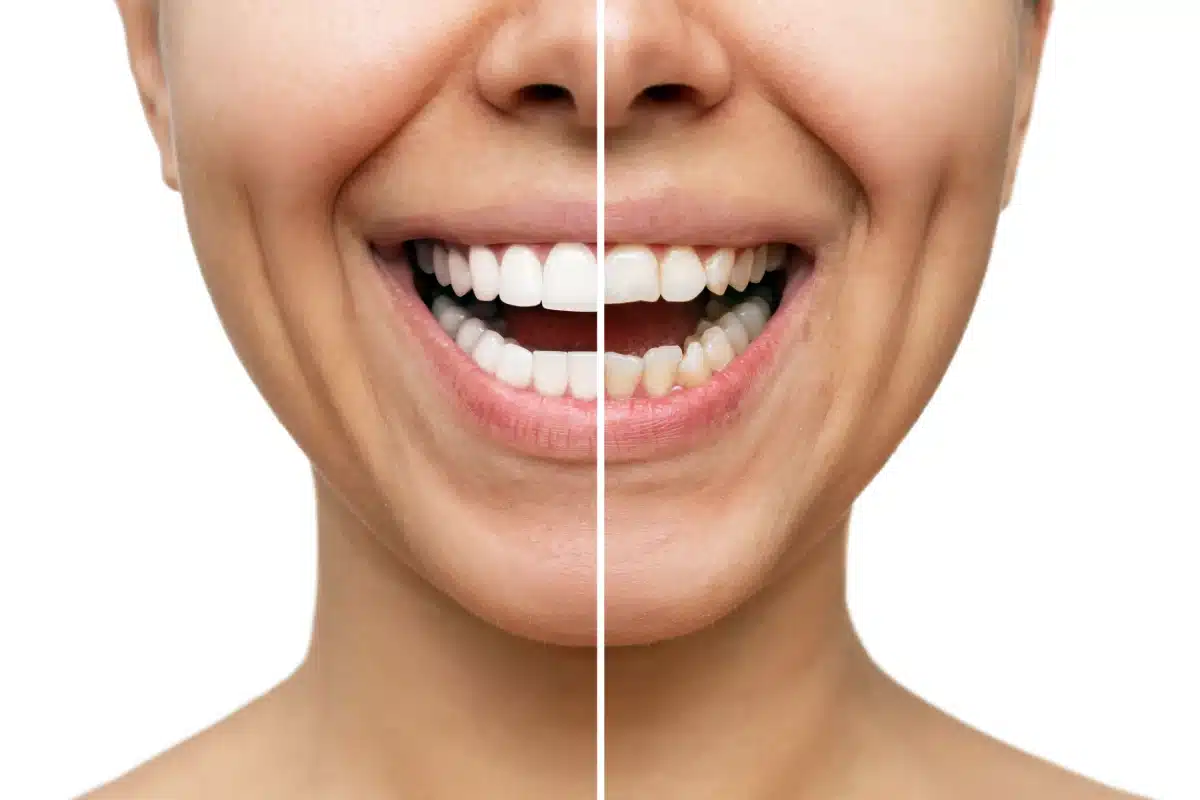
Dental veneers can totally give your smile a new lease on life in just a few visits to the dentist, but they do require a bit of a long-term commitment to all these fancy new teeth of yours. So, before you make the jump, you need to weigh up the pros and cons, the benefits, costs, and the fact that once you commit, you’re locked in.
So, you must be wondering “Are Veneers Worth It?” Well, they’ll give you that super natural-looking smile. Dental veneers offer a dramatic cosmetic improvement and are quite long-lasting, but you’ll need to lose some of your natural tooth enamel and be prepared to shell out some cash upfront if you choose dental veneers as a cosmetic procedure.
They’re great for people with loads of cosmetic concerns, discoloration, chips, gaps, or minor crowding.
First off, keep in mind:
- They work best for sorting out lots of different cosmetic imperfections all at once.
- Porcelain veneers are far more durable and resistant to stains than their composite cousins.
- They’ll set you back $800 to $2,500 per tooth in the States, and don’t expect your insurance to cover it.
- Veneers aren’t a replacement for orthodontics, implants, or fillings, and you can’t get them if your teeth are still riddled with decay or gum disease.
What Are These Fancy Porcelain Veneers I Keep Hearing About in Cosmetic Dentistry?
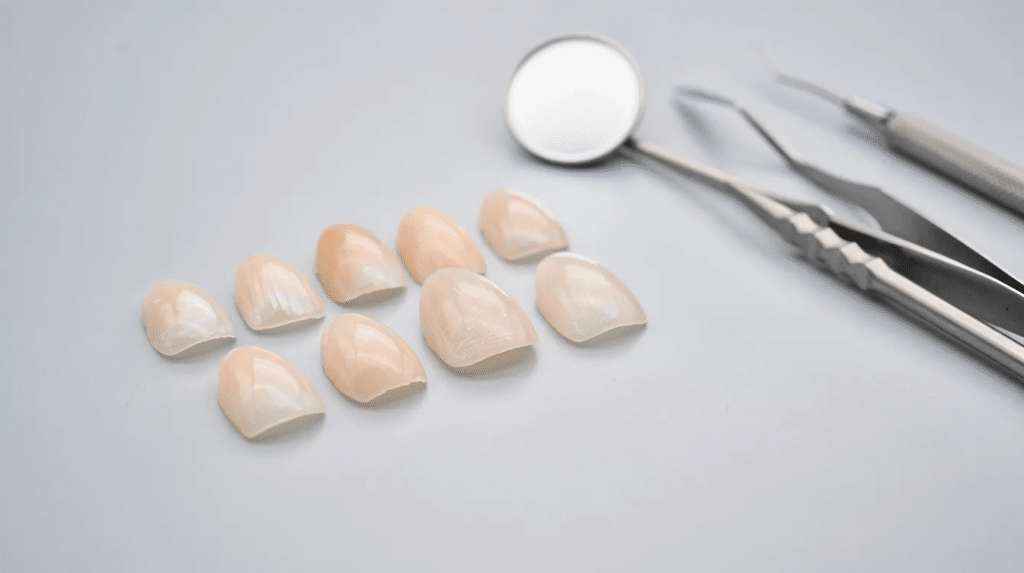
Dental veneers are super thin custom-made shells of either porcelain or composite resin which get glued onto the front of your tooth surface to sort out things like colour, shape, size or length.
There are basically two types:
- Porcelain veneers: These get made in a dental lab and are the real deal when it comes to durability, stain resistance, and looking natural.
- Composite veneers: These get applied straight to your tooth in one go and are a bit more affordable, but not as tough as porcelain. At DA, we don’t offer composite as an option due to lower durability.
Veneers are all about making your smile look better, and they can even sort out a few minor chips or worn-down edges, but genuine veneers will require a wee bit of irreversible enamel removal, so you’re locked in for good.
Who are these veneers really for?
Veneers are perfect for people whose teeth and gums are in pretty good nick and just want a smile update, not a full-blown dental overhaul. Any cavities or gum disease better be fixed before you commit to veneers.
They’re good for:
- Really discolored or stained teeth that whitening can’t take care of
- Chipped, worn or wonky teeth
- Small gaps between teeth
- Slight crowding or a bit of tooth rotation
- Discoloured fillings that are visible
But veneers aren’t ideal for:
- Heaps of decay
- Gum disease
- Teeth that are badly filled or broken
- Major bite issues
- Untreated teeth grinding
- Patients without enough healthy natural tooth structure to safely support veneers
- Young patients with really wonky teeth, who are often better suited to braces or clear aligners
The best way to figure out if veneers or another treatment is right for you is a consultation with a cosmetic dentist, complete with X-rays and some photos.
What’s the dental veneers placement process like?
Traditional porcelain veneers take 2 to 3 visits over 2 to 4 weeks, while composite ones can usually be done in just one go.
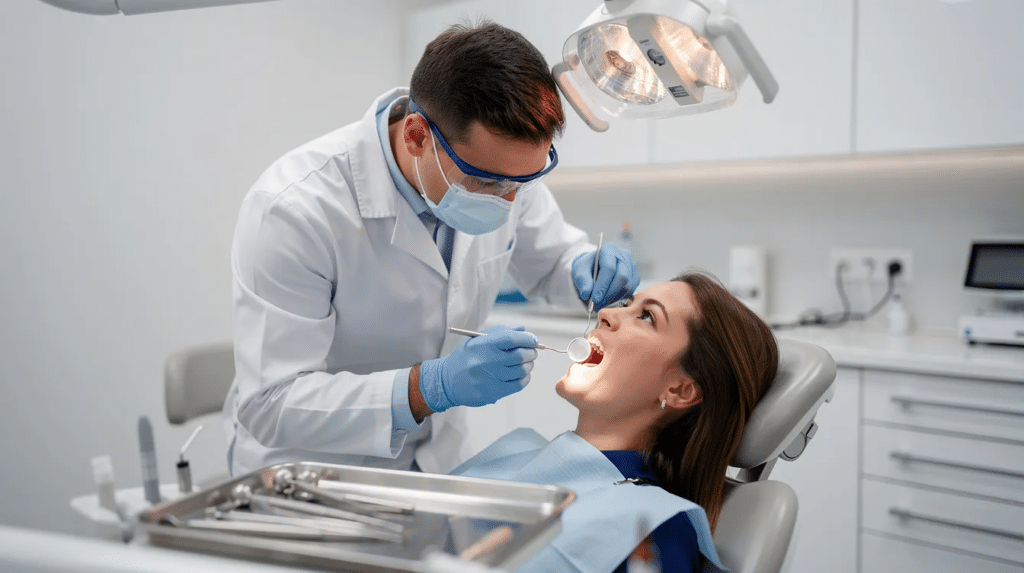
- Consultation: Your dentist checks out your teeth, takes some snaps, picks a shade, and goes over all your options with you.
- Anesthesia (if needed): Local anesthetic is often used for traditional porcelain veneers to keep you comfortable during tooth preparation. If you’re getting minimal-prep or no-prep veneers, you may not need any numbing at all.
- Tooth prep: A thin layer of enamel (0.3 to 0.7 mm) gets whittled away so the veneers look right. There’s also a variant called a minimal prep veneer which requires less enamel but may not be suitable for everyone.
- Temporary veneers: Porcelain veneers will need some temporary ones while the final ones get made.
- Final placement: Your dentist checks that the veneers fit properly, glues them in place, adjusts the bite, and gives them a nice polish to make them look just like real teeth.
- Getting used to your bite: Your bite may feel a little different at first because the veneers slightly change the shape of your teeth. Most people adjust within a few days, but if your bite still feels off after a week or two, your dentist can make small adjustments.
- Normal discomfort: It’s common to have mild tooth sensitivity to hot and cold foods, slight gum tenderness, or minor soreness around the treated teeth for a few days. These symptoms usually settle down on their own as your mouth adjusts.
Your First Day after Getting Veneers:
Your teeth will probably look noticeably brighter and more even straight away, but they may feel a bit bulkier or smoother than your natural teeth at first. Speaking and eating can feel slightly unusual for the first day or two, though most people adapt very quickly.
The Pros: When They’re Worth It
Veneers can deliver a dramatic, long-lasting confident smile makeover with just a few visits.
- Complete smile upgrade: Dental veneers provide multiple aesthetic benefits: They improve the color, shape, size, symmetry, and spacing of your teeth all at once.
- Natural-looking results: Porcelain veneers closely mimic real enamel for a lifelike appearance.
- Stain-resistant: Porcelain resists stains from coffee, tea, wine, and tobacco better than natural teeth.
- Confidence boost: Many patients feel more comfortable smiling, speaking, and taking photos after treatment.
- Minor functional benefits: Veneers can strengthen small chips and worn edges on otherwise healthy teeth.
The Cons: Veneers Cost, Risks & Maintenance
Veneers are a long-term investment that comes with permanent changes and ongoing care.
- High cost: Porcelain veneers typically cost $800–$2,500 per tooth in the U.S., while composite veneers are less expensive but still add up when treating multiple teeth. At DA, Porcelain Veneers are $350 per tooth.
- Limited insurance coverage: Since veneers are considered cosmetic, dental insurance rarely pays for them except in certain trauma-related cases.
- Permanent commitment: Traditional veneers require irreversible natural enamel removal, so they’ll eventually need maintenance, professional cleanings, and replacement.
- Potential risks: Temporary tooth sensitivity is common, and veneers can chip, crack, or come loose over time.
- Lifestyle adjustments: Avoid biting hard objects, wear a night guard if you grind your teeth, and plan for future replacement as part of the long-term cost.
Porcelain vs Composite Veneers: Why are Porcelain Veneers Superior?
| Feature | Porcelain Veneers | Composite Veneers |
| Fabrication | Lab-made (dental lab) | Chairside, single visit |
| Lifespan | 10–15 years with proper care | 3–5 years typically |
| Stain resistance | Excellent (glazed ceramic) | Moderate (more porous) |
| Cost per tooth (US) | $900–$2,500 ($350 at DA) | $250–$1,500 |
| Enamel removal | More tooth reduction | Less invasive |
| Repairability | Usually full replacement | Easier chairside repair |
Porcelain veneers tend to be the more convenient long-term option because they’re durable, stain-resistant, and require less maintenance. With good oral care, they can last 10 to 15 years or even longer, while composite veneers typically last around 3 to 5 years and may need more frequent repairs or replacement.
At DA, porcelain veneers are the go-to choice. At $350 per tooth, you can get the higher quality and durability of porcelain at a price that’s close to what you’d pay for composite.
Composite veneers are cheaper and can often be completed in one visit, but they stain and wear more easily. Porcelain does cost more upfront and requires a small amount of enamel to be removed, but its longer lifespan and lower maintenance can make it the better choice if you’re looking for a durable, natural-looking smile without frequent touch-ups.
Veneers vs Teeth Whitening and Other Cosmetic Options
Veneers are just one of the many cosmetic dentistry options available. And plenty of people achieve great results with less invasive treatments.
- Teeth Whitening: Professional whitening can brighten up your natural teeth, but it won’t fix any misshapen teeth or close any gaps. It’s a pretty affordable option; it’s reversible, but it’s not always the best solution for deep stains.
- Dental Bonding: This procedure uses resin to repair small chips and gaps in your teeth, and it requires very minimal tooth removal. It’s less expensive than veneers, but more prone to staining and chipping.
- Orthodontics: If you’ve got a problem with crooked teeth or a misaligned bite, then an orthodontic treatment is probably your best bet. They can take anywhere from 6 months to 2 years to complete, but they’re definitely worth it if you want a beautiful smile.
- Other options: There’s also enamel contouring, which smooths over minor imperfections, and dental crowns, which are better for really damaged teeth.
Some patients find that combining whitening with a few veneers is a great way to get a brilliant smile without breaking the bank.
Are Dental Veneers Permanent? Longevity, Maintenance, and Everyday Life With Veneers
With proper care, unlike teeth whitening, porcelain veneers provide long-lasting results and will typically last 10 to 15 years and sometimes even longer, while composite veneers will usually need to be replaced every 3 to 5 years.
To keep your custom veneers looking their best, you’ll need to brush twice a day with non-abrasive toothpaste, floss every day, and schedule routine dental cleanings. And don’t forget to wear a night guard if you grind your teeth; it’ll help save your veneers a lot of wear and tear.
How Much Do Veneers Really Cost Over a Lifetime?
It’s not just the upfront cost of veneers that you need to think about; it’s also the ongoing maintenance, repairs, and replacement costs that you’ll need to factor in over the life of your veneers.
2026 price ranges:
| Region | Porcelain (per tooth) |
| US | $900–$2,500 |
| UK | £250–£975 |
| Australia | AUD $1,200–$2,500 |
| Mexico (DA) | $350 |
A smile makeover with 8 to 10 porcelain veneers can cost $10,000 to $25,000+ in the U.S. At Dental Algodones, we list porcelain veneers at $350 per tooth, potentially saving you around $4,400 to $21,500 on 8 to 10 veneers. Porcelain veneers can last 10 to 15 years, while composite veneers typically last 3 to 7 years.
Costs vary based on the dentist, materials, and any extra treatments you may need. Insurance rarely covers cosmetic veneers, so financing or payment plans may be worth considering.
So… Are Dental Veneers Worth It? A Quick Checklist
Whether veneers are worth it for you depends on a number of factors, including your smile goals, your oral health, and your budget.
Before you make a decision, ask yourself:
- What do I want to improve: colour, shape, gaps, or alignment?
- Have I considered alternatives like whitening, bonding or orthodontics?
- Do I value durability more than reversibility or lower cost?
- Am I happy with the idea of a procedure that can’t be reversed?
- Can I keep up with good oral hygiene and regular dental visits?
- Am I prepared to replace my veneers in 10 to 15 years if needed?
Veneers are usually worth it for people who have multiple front-tooth imperfections and want long-lasting cosmetic results. If you’re not sure, then removable veneers might be worth checking out; they let you get a feel for the look without having to commit to the full treatment.
The best next step is probably to schedule a cosmetic dentistry consultation to chat through your options and create a plan that fits your needs and budget.

F.A.Q
Can I Get Just One or Two Veneers Instead of a Full Set?
Absolutely. One or two veneers can fix a chipped or discolored tooth. The main challenge is matching the veneer to your natural teeth, so choosing an experienced cosmetic dentist is important.
Do Veneers Ruin Your Natural Teeth?
No. Veneers don’t ruin your teeth, but traditional veneers do require a small, irreversible amount of enamel to be removed. When properly planned and placed on healthy teeth, they can protect and improve your smile.
Are Veneers Painful?
Not really. Local anesthesia keeps the procedure comfortable. Afterwards, you may have mild sensitivity or sore gums for a few days, which usually settles with over-the-counter pain relief and avoiding very hot or cold foods.
Can Veneers Be Removed if You Change Your Mind?
Yes, but because enamel has been removed, your teeth will still need another restoration. If you’re unsure, consider reversible options like teeth whitening, bonding, or orthodontics first.
How Many Veneers Do People Usually Get?
Most people choose 6–10 upper front veneers for a balanced smile. The right number depends on your smile goals, budget, and whether treatments like whitening or bonding can improve the surrounding teeth.