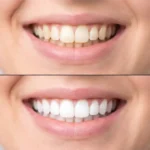

If you’re giving some serious thought to veneers vs crowns, you’ve got one key goal in mind: a smile that not only looks better but feels reliable too. But here’s the thing: veneers and crowns are two different tools, suited to different jobs, and used in different ways.
The “right” choice often comes down less to what you want to change and more to what your tooth can safely handle. So while looks are important, it’s the coverage and strength that really decide things once you look past the before-and-after photos.
Veneers vs Crowns: The Basic Bottom Line
At a glance, veneers cover only the front surface of an existing tooth, while crowns wrap the whole tooth surface. Think of it like this: veneers are all about cosmetics, crowns are about protection and widely used to restore teeth, and that’s the simplest way to remember the difference.
Coverage: Veneers just cover the visible front surface, while crowns cover all sides of the existing tooth structure above the gum line. And when a tooth is weakened, full coverage can be a big game-changer.
When to use each: veneers are perfect for tweaking color, shape, small chips, and a bit of spacing between the adjoining teeth while leaving the rest of the original tooth intact. Crowns, unlike veneers, are your best bet when an entire tooth is weakened, cracked, heavily filled, or root canal-treated. And when it comes to safety, it’s always structure first, symmetry second.
Tooth prep: Veneers tend to be more conservative with the natural tooth structure, while crowns usually need a bit more reshaping to get the coverage you need. Prep all depends on what you want to achieve and the condition of the tooth.
Common materials: veneers are usually made from porcelain or composite, while crowns are often zirconia or all-ceramic, and the material usually follows function.
What are Dental Veneers? And What Tooth Preparation is needed?
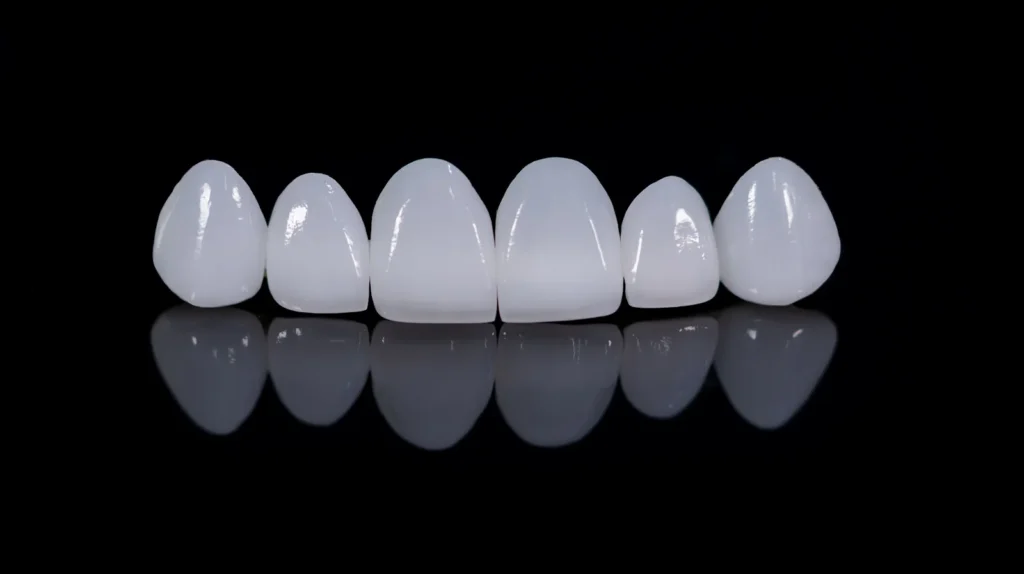
A dental veneer is basically a thin layer made out of porcelain or composite resin bonded to the front of a tooth, like a custom “face” that gives it a fresh new look. Veneers are all about refinishing rather than reinforcing.
The veneer process works best when the tooth underneath is stable and has healthy enamel to bond to. To prepare your tooth for a porcelain veneer, your dentist will grind down about half a millimeter of the tooth’s enamel on the front of your tooth.
Porcelain Veneers vs Composite Veneers
Porcelain veneers are made in a lab and designed to mimic the look of natural tooth enamel, so they can look crisp and lifelike. Porcelain holds its color well if the planning and polishing are done just right.
Composite veneers, on the other hand, are built from tooth-colored resin and are a good fit when you just want to make a small tweak or save a bit of money. But a composite can stain or wear a bit faster depending on your habits.
What Dental Crowns Are (and When Dentists Really Think They’re Best)

A dental crown completely covers the entire tooth, which means more of the weakened tooth will need to be filed down before a crown can be placed. A dental crown also improves the look while also protecting the tooth from splitting or breaking. Crowns are the way to go when an entire tooth has already been through a lot and is no longer stable.
They’re often recommended after major decay, big fillings, visible cracks, or root canals. They help spread the forces of biting and chewing more evenly, reducing the risk of a tooth failing.
Crown Materials
Zirconia crowns are known for their strength, which is a big deal if you clench, grind, or have a heavy bite. Zirconia can handle it, and modern options still look natural if the shade planning is done well.
All-ceramic crowns, on the other hand, are often a great choice for front teeth where a natural look really matters. Ceramics can look incredibly lifelike if the contours, translucency, and gumline transitions are all handled just right.
The 6 Key Lifestyle and Oral Hygiene Differences That Matter
- How much tooth is removed: Dental veneers usually need less prep, but dramatic changes may need a bit more space.
- Strength under pressure: Veneers can be durable on healthy teeth, while crowns are the way to go when dental health is compromised.
- Aesthetic flexibility: both can look great, but masking dark teeth takes planning.
- Long-term commitment: once prepped, you’re committing to a dental restoration that will need maintenance, regular dental check-ups, and future replacement.
- Sensitivity risk: Crowns might raise sensitivity risk because they often involve more tooth reduction.
- If it chips: composite veneer chips may be repairable, while porcelain crown and veneer fractures may need replacing.
These differences matter in real life, like “will this chip if I bite a crusty baguette?” Real life puts restorations to the test, so planning around your bite and habits is key.
What The Treatment Process For Both Veneers and Crown Placement Usually Looks Like
Most veneer and crown cases start with an exam, some photos, and imaging to check out what’s going on beneath the surface. Diagnostics come first because the safest plan depends on what the tooth looks like inside.
Then comes tooth prep, a digital scan or impression, and finally a placement appointment for bonding or cementation. And don’t forget to get your bite checked because uneven pressure can chip new work fast.
If you’re doing multiple teeth, many dentists also do a “test drive” step, like a wax-up, mock-up, or temporaries, that gives you a sneak peek at the shape and length. Previewing like this reduces surprises and gives the team a clear target before the final ceramics are made.
Which Is Right For Your Situation?
If you’re stuck between dental veneers vs crowns, start by asking yourself one question: are you trying to improve the look of a healthy tooth, or protect a tooth that’s already been through a lot? That simple question can help clarify things in a real consultation. Veneers might work well for you if the tooth is generally healthy, you want some cosmetic work done, and you’ve got strong enamel for bonding to stick to. The health of the enamel is actually crucial for getting a reliable veneer bond.
Dental crowns often come into play when a tooth is weakened either by a big filling, cracks, a lot of wear and tear, or a root canal, and needs full-on protection to keep it going. The key thing here is that the priority is going to be protection when the tooth structure is shot.
If you’re a clencher or grinder, that doesn’t necessarily mean veneers are off the table, but it will definitely change the odds. The way you bite has a real impact on the success of any dental work, and sometimes a night guard or a crown is the safer bet.
Veneers vs Crowns for Common Scenarios
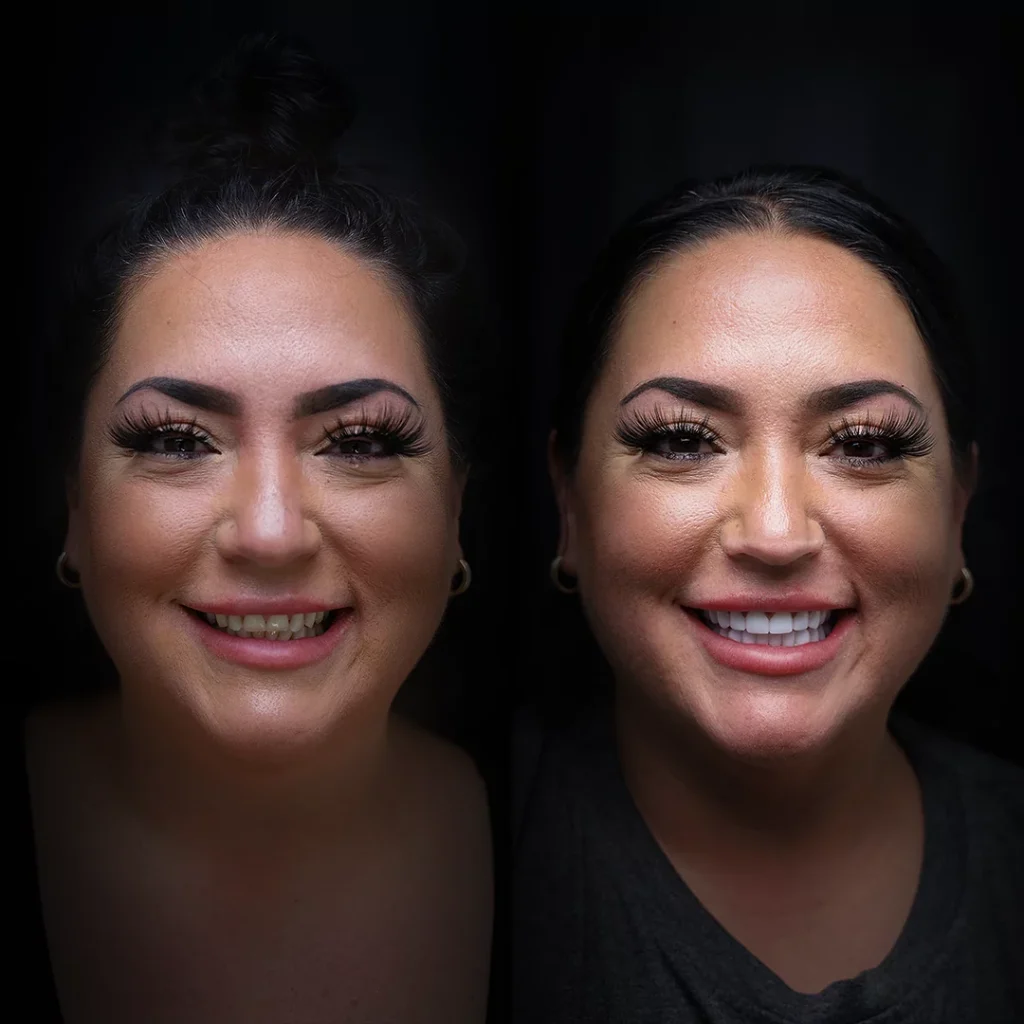
If you’re still reading about this stuff and thinking to yourself, “Okay, but what about my tooth?”, you’re not alone at all. Dentists see these kinds of scenarios come up all the time.
A chipped front tooth can be a good fit for veneers if the chip is small and the tooth itself is otherwise pretty strong, because a veneer can just blend the front surface into a smooth new shape. But if the chip is pretty big, a veneer might not be enough; you’d need a crown to give that tooth some proper protection.
Severe yellowing or staining that whitening just isn’t touching can sometimes be fixed with veneers if the underlying tooth is healthy. But if the tooth is really damaged or structurally compromised, a crown might be your better bet. A crown is a better mix of coverage and protection.
If your teeth are just a bit crooked or spaced unevenly, veneers can help by reshaping what people see from the front. But if the problem is more serious, orthodontics can be a more conservative route to take before you start with the cosmetic work.
Worn-down edges and a tired-looking smile line can be fixed either way, but what’s going to make the decision is usually how much stress you put on your teeth while biting or grinding your teeth. Wear and tear can be a sign of bigger problems, so if you’ve got a lot of wear and cracks, a crown might be the safer bet.
A tooth that’s got a big filling or just had a root canal is usually a crown kind of situation. The tooth walls are always going to be a bit fragile after that kind of work, and a crown will stop it from splitting right in two.
What If Neither Is the Best Option?
Sometimes the best thing to do is just not do a veneer or a full crown, if the tooth still has a lot of healthy structure to it.
For tiny chips or gaps, you can get away with just some bonding work without having to take too much of the tooth away. And if the problem is a bit more serious but you don’t need a full crown, an onlay can be a good compromise; it gives you some protection on the chewing surface without going whole hog on the tooth.
Cost, Longevity, and Dental Insurance 101
Cost isn’t just “veneers are X and dental crowns are Y”; a whole bunch of other factors come into play, like the material you choose, how many teeth you need done, what kind of adjustments you need to make to your bite, the cost of lab work, and whether you need to get some other dental work done first.
When it comes to getting a good value out of your dental work, think about stability. The best results are going to be the ones that stay healthy and functional for a long time. Longevity is going to depend on a lot of factors, grinding, hygiene, your diet, but also the material your dentist chooses.
Dental insurance can be a total nightmare because veneers are often considered cosmetic, while dental crowns are more likely to be covered if you’ve got some documented damage or tooth decay. At DA, we can help you to write up a clear plan that explains why we’re recommending one option over the other and also fill out any reimbursement or OON forms you may need back home.
Planning Veneers or Crowns in Los Algodones
If you’re coming from the States or Canada, planning is going to have to be a little more tight-lipped to avoid any surprises or last-minute scrambles.
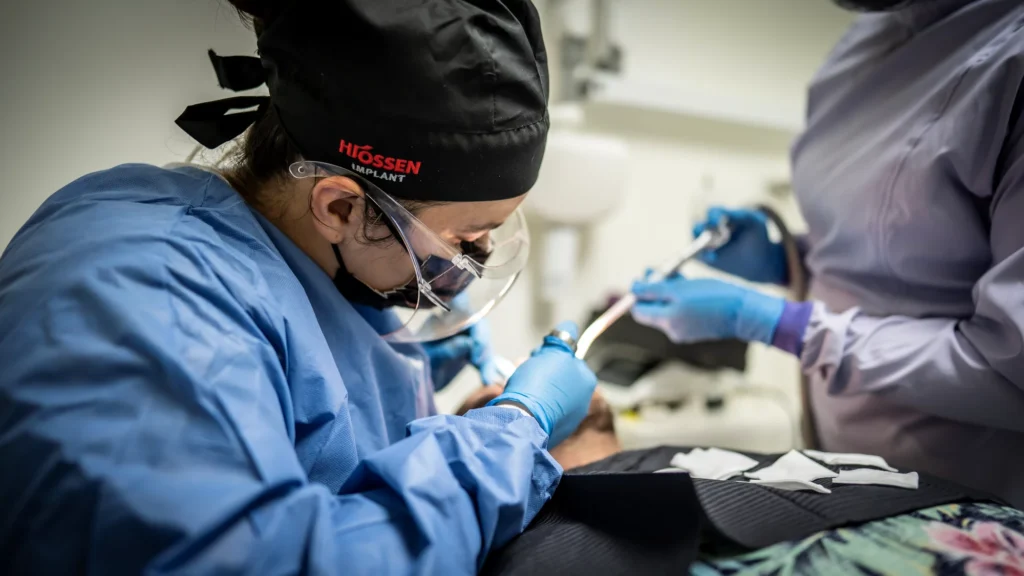
We make it easier by offering a Free Virtual Diagnostic where you can send over some photos, prior X-rays if you’ve got them, and what you’re hoping to get out of the treatment before you even get here. Get your ducks in a row with the basics so your dentist can give you a clear idea of whether veneers or crowns are the way to go.
A lot of our travelers schedule their treatment in two stages: first, an initial visit to get their teeth prepped and recorded, then a second visit for the final placement after the lab work is all done. The timeline will depend on the details of your case, so just make sure you know how long you’re looking at and whether you’ll get some temporary crown in between.
When you do come in for treatment, your dentist will be using some pretty high-tech tools to make sure everything fits and is safe to go, such as:
- 3D imaging with a CBCT scan when it’s needed for a deeper look\
- Digital scans to get precision and make sure the lab gets all the right details\
- A bite evaluation to reduce chipping and premature wear
Los Algodones vs Cancún Dental Trips
Los Algodones is great for people who want a quick trip to the border and can get in and out of here fast. Convenience is the main draw for lots of our travelers.
But if you want a vacation wrapped around your dental treatment, Cancun might be a better fit. Just be aware that this tends to mean flying, longer stays, and a bit more uncertainty when it comes to timing and budget.
At Dental Algodones, we’re here to help you work out what’s going on, explain your options, and even help with planning your visit and getting the logistics right. Get a free quote or ask about travel support, shuttle coordination, and all that jazz when it comes to planning your veneers. If you are planning to get veneers, then our team of highly qualified cosmetic dentists at Dental Algodones will be able to help you out, even if you are in the States or Canada; we actually offer a free virtual consultation before you even get here, so we can have a look at what we can do for you. Once you’ve had your procedure done, we will check up with you virtually to see how things are going.
Crowns Vs Dental Veneers FAQ
Do veneers ruin your teeth?
They require some enamel reshaping, but how much depends on your specific case.
Do crowns last longer than veneers?
Dental crowns can be more protective for weak teeth, but longevity depends on care and habits for both.
Which looks more natural?
Both can look natural: good planning matters more than the material.
Can I get veneers if I grind my teeth?
It depends on how severe the grinding is and whether you use a night guard.
How many dental visits are needed?
Usually 2 main visits: prep and placement, sometimes with a temporary crown in between.
Get Your Free Quote Today
If you are still trying to decide between veneers and crowns, then the next step is actually to get in touch with us. We can do a free virtual diagnostic to take a closer look at your case and find out what will work best for your tooth, your goals, and your travel plans. When you are ready, just get in touch, and we will be happy to give you a free quote.