Missing teeth can affect more than just your smile. They can change how you eat, how you speak, and how confident you feel when you order a taco or give a presentation at work.
Of course, you’re looking for tooth replacement options that will feel “normal” again, so you can order a taco without embarrassment. The good news is that both dentures and dental bridges can give you back your teeth, but they’re suited for different people.
Here’s the bottom line: both replace missing teeth, but they solve different problems. Once you understand the difference between fixed and removable, the decision usually becomes a lot clearer.
Understanding the Basics: Dentures vs Bridges
In simple terms, a dental bridge is a fixed solution that fills a gap using your neighboring teeth or implants for support. Dentures, on the other hand, are removable and can replace several teeth or an entire arch.
A bridge is a good choice when you’ve got a small gap, and you like the feeling of knowing your now-healthy teeth are always in place. Dentures are often the way to go for people with multiple missing teeth, or who need something that’s flexible and can be adjusted as their mouth changes.
What are Dental Bridges and how do they work?
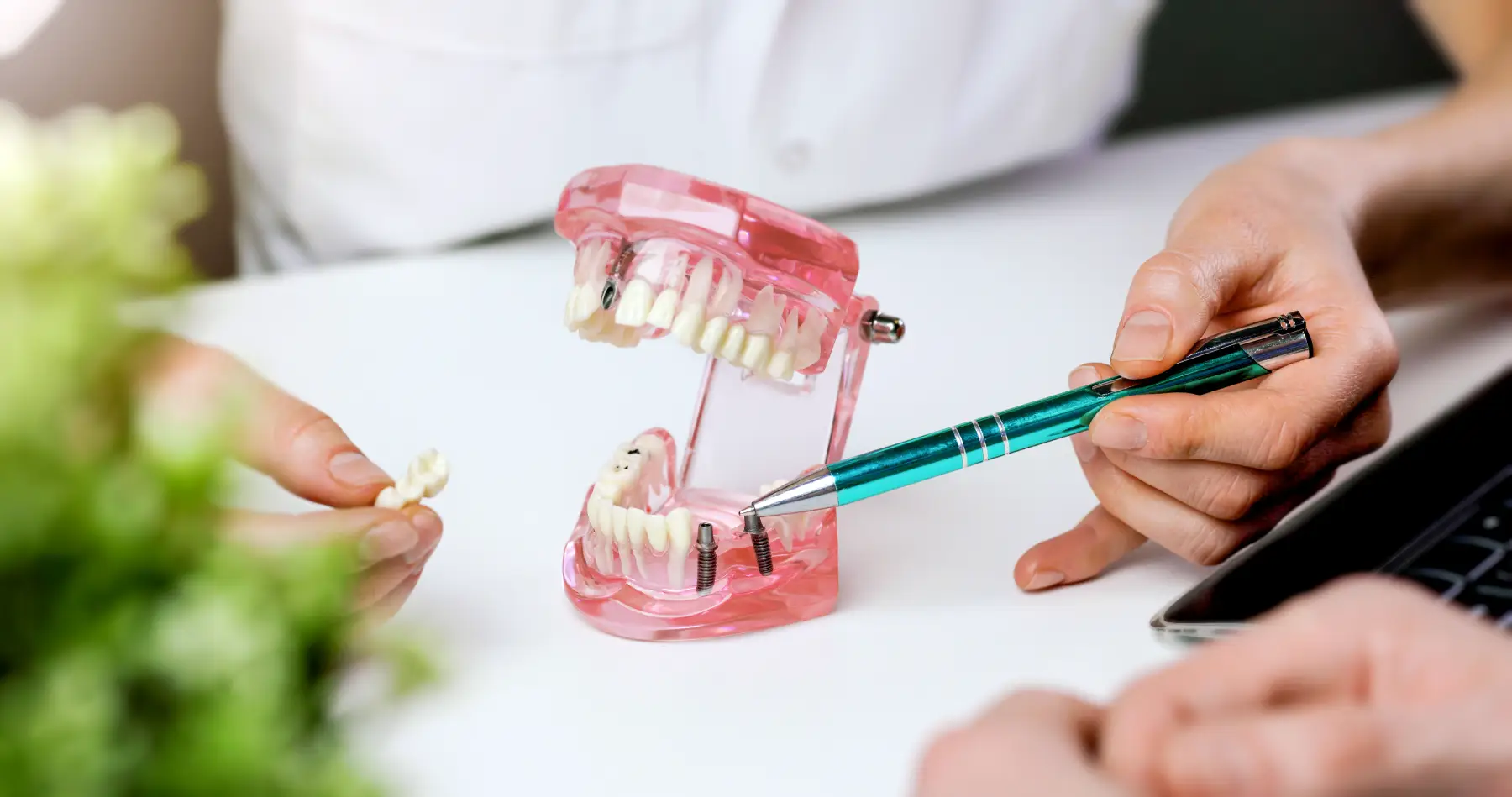
A bridge is a solution for a tooth (or a small group of teeth) that are missing. The replacement tooth (pontic) is stuck between two remaining natural teeth (abutments) or anchored to an implant. And the best part is that you don’t have to take it out at night.
A dental bridge makes sense if you’re missing one tooth, and the adjacent natural teeth on either side of the gap are strong enough to take the strain, and you’re after a stable solution. It’s also a good option if you don’t want to deal with a removable appliance.
The Main Types of Bridges (Explained Simply)
- A traditional bridge is supported by the adjacent teeth on either side of the gap.
- A cantilever bridge is only supported on one side, and that’s usually used for very specific situations.
- A Maryland bridge has bonded wings that fit behind the natural teeth next door, and that’s commonly used for front teeth.
Dental Implant-supported Bridges
- An implant-supported bridge is anchored directly to an implant, so you don’t have to rely on your natural teeth.
How Materials Affect Your Bridge (or Denture)
The materials used to make your bridge affect how strong it is, how it looks, and how much space it takes up. You may have heard of zirconia, ceramic, porcelain, or even metal, and the best choice for you will depend on where the missing teeth are, how hard you bite, and how important it is that your bridge looks natural.
What Dentures (Or False Teeth) Are and How They Work
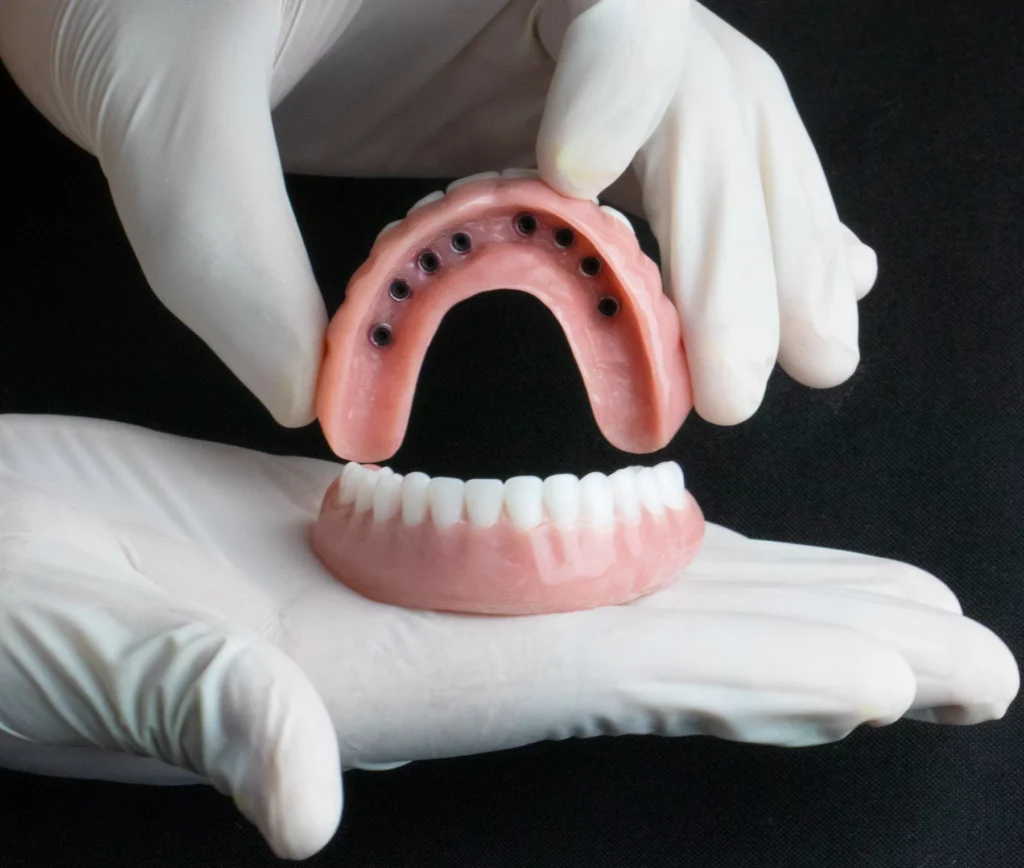
Dentures are removable prosthetics that replace missing teeth. If you’ve got a full upper or lower arch missing, complete dentures might be the solution. If you’ve lost a few teeth, a partial denture is more likely to be the way to go.
Some people also talk about immediate dentures, which are put in place right after a tooth is pulled out, so you don’t have to go around with nothing in your mouth. That can be a real blessing, but it usually needs some adjustments as your gums change shape over time.
What Affects the Comfort and Stability of Your Denture
Comfort is all about fit, and the fit can change over time as your gums and bone change shape. That’s why you often get sore spots and need some adjustments in the early days, especially if you’ve had some teeth pulled.
If stability is your biggest worry, you’ll want to talk to your dentist about what’s realistic for your case. Sometimes it’s just a matter of getting a better denture design, and sometimes it’s about planning for implant support down the line.
5 Key Differences That Will Help You Choose between Bridges and Dentures
- Fixed vs removable, which do you prefer?
- Impact on neighbouring teeth: how much strain will your bridge put on the teeth around it?
- How you clean it, bridges are a bit more high-maintenance than you think.
- How many teeth are you replacing? Dentures can handle more teeth than bridges.
- How will your mouth change over time? Will you need to get your denture relined, or is it fixed in place?
Which One is Right for You?
When people ask “dentures vs bridges”, what they really mean is “which one will feel secure, look natural, and not give me any hassle”. The answer to that question depends on a few things, like how many teeth you’re replacing, if you have dental crowns or gum disease, and what you’re looking for in a solution.
A bridge is a good choice if you’re replacing one tooth (or a small group of teeth), the teeth on either side of the gap are healthy enough to support it, and you like the feeling of knowing your teeth are always in place.
Dentures are often the way to go if you’re replacing several teeth or a whole arch. You might also want to consider dentures if you need something that can be adjusted as your mouth changes over time.
If stability is your top priority, you might want to talk to your dentist about implant-supported options. It’s not something you need to decide on right now, but it’s worth discussing early on.
Care and Maintenance
With a bridge, you just need to brush as normal, but you also need to make sure you’re cleaning under the pontic. That means using floss threaders, super floss, or interdental brushes to protect the gums around the bridge.
With dentures, it’s a bit more hands-on. You need to remove them, give them a clean every day, store them safely, and keep an eye out for any changes in how they fit, because you might need to get some adjustments or have it relined over time. Quick Gut Check: If the thought of getting your teeth removed to clean them makes your skin crawl, you might be a good fit for a bridge. On the other hand, if you want something that can be adjusted without relying on the neighbouring teeth to hold it in place, dentures might be a better option for you.
Planning Dentures or Bridges with Dental Algodones
If you’re heading down to Mexico from the States or Canada, you’ll want to make sure you’ve got a clear plan in place. One that includes getting a clear recommendation, a realistic timeline, and the pricing all spelled out before things get irreversible.
Our team at Dental Algodones can get you started with a Free Virtual Diagnostic, send us over some photos, tell us about your goals, and any records you’ve got kicking around before you even book your trip. And in the clinic, ask us about the process, we’ll get the impressions, bite analysis, shade selection, and try-ins worked in when it makes sense for you.
Start your Oral Health Journey Now, Get a Free Quote!
If you’re still trying to decide between dentures and a bridge, the best thing to do is sit down with a case review and get a written plan for your mouth and your lifestyle. That’s how you find the best solution for you.
Starting at Dental Algodones and our Free Virtual Diagnostic is the first step. Share what’s missing from your smile and what you want to be able to do again, and you’ll get a clear, customized recommendation from us based on your case, not some generic checklist.