Lots of parents are stumped on when to take their little ones to the dentist, especially when they only have one or two teeth. The answer is simple: start early. The ideal first visit isn’t about drills or fillings; it’s about prevention, helping children feel comfortable, and establishing habits that support lifelong dental health and a lifetime of good oral health.
- According to the American Academy of Pediatric Dentistry, their first trip to the dentist should happen by the time they’re one year old or within six months of the first tooth coming in.
- Those baby teeth may only be temporary, but they play a huge role in chewing, speech development, jaw growth, and even the alignment of future adult teeth.
- Once the initial visit is out of the way, kids should be seeing the dentist every six months, unless their dentist recommends more frequent checkups.
- The first dental appointment is usually a breeze: the dentist will do a gentle exam, probably show them some cool stuff, and maybe even give them a fluoride varnish if that’s what they need. They rarely take X-rays of those baby teeth.
- A pediatric dentist is trained to help kids feel safe and at ease, even if they do get a little fussy or anxious.
When Should You First Take Your Child To The Dentist?
Most kids should have their first dental visit by the time they’re a year old, or within six months of their first tooth popping through. There’s a good chance that it’ll be between six and 12 months, so mark it in your calendar. Some signs that it’s time for a first dental visit include the eruption of the first tooth, and if that happens around six months, you’ll be booking that dentist appointment before you know it.
The American Academy of Pediatric Dentistry, among others, recommends following the “first tooth or first birthday” rule. That means the first dental visit should take place by the time your kid is one, and they should be seeing a dentist within six months of that first tooth coming in. Don’t put it off until they’re three because their teeth look fine, just get ’em in there.
For example, first tooth at 6-8 months, first dental appointment around 12 months, second visit about six months later. Easy peasy.
Why Early Dental Visits Matter For Your Child’s Teeth
Those baby teeth, also known as primary teeth, usually start coming in around six months old and stay with your kid until their adult teeth come in to replace them.
They play a huge role in general health and development: they help your kid chew, speak clearly, support jaw growth, and even make sure their adult teeth come in straight. They’re key to speech development and alignment, and problems with those baby teeth can even affect their adult teeth.
Baby teeth aren’t just pretty to look at: one in four kids aged 2-5 has cavities, and that’s a pretty serious issue. Getting your kid in for early dental visits helps ensure they’ve got a good dental home, and, more importantly, catches any problems early on, like tooth decay, enamel defects, or even tongue-tie.
Watch for signs of early dental problems like tooth decay or gum disease: visible spots on their teeth, red, swollen, or bleeding gums are all warning signs that something’s not right.
Milestones: Ages And Stages For Children’s Dental Care
Think of pediatric dentistry in simple milestones: kids need to see the dentist at ages 1, 2, 3, 4, and 7, with regular visits in between.
| Age | What usually happens |
| 1 | first visit, oral tissues check, gums, first tooth appears, diet, and brushing advice |
| 2 | Most children have more baby teeth; the dentist checks for hidden tooth decay |
| 3 | Most children have 20 baby teeth; cleaning and exam may be easier |
| 4-5 | Regular dental visits track oral development, jaw growth, thumb sucking, pacifier habits, lip sucking, and other bad habits |
| 6-7 | First permanent molars appear; the dentist may discuss orthodontic screening around age 7 |
At each visit, dentists will monitor the development of your kid’s jaw and emerging teeth during the early years. Handling a child at the dentist early on can reduce their anxiety and get them into a lifelong pattern of good oral health.
What To Expect At Your Child’s First Dental Appointment
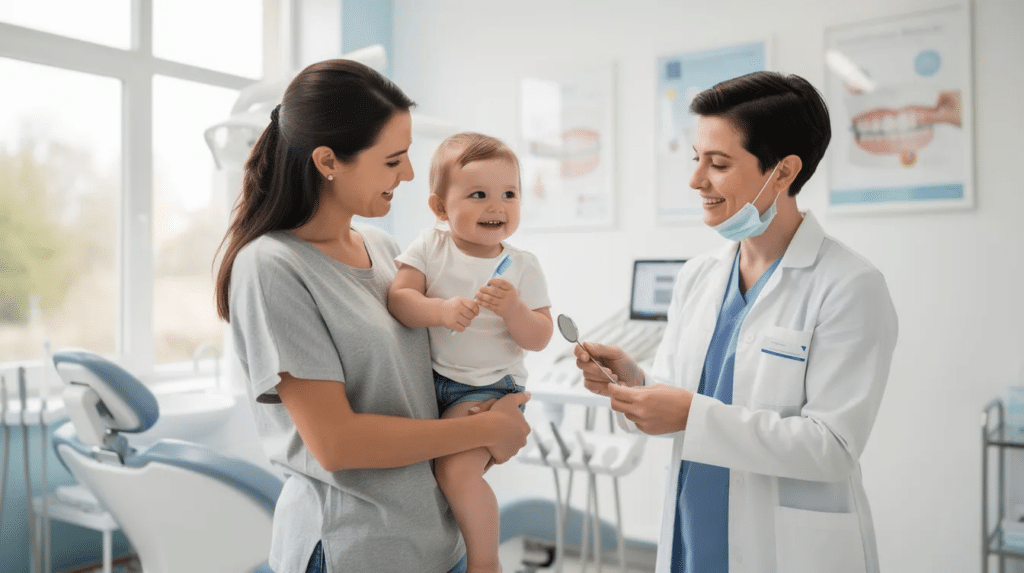
The first visit will probably last around 30 to 45 minutes. A young child may sit on a parent’s lap in a knee-to-knee position while the dentist checks the child’s mouth. Here’s what a typical first appointment might look like:
- A visual exam of the kid’s teeth and gums
- A gentle cleaning to get those teeth nice and clean
- Fluoride varnish, if that’s what they need
- Coaching the parents on proper brushing, diet, bottle use, and fluoride toothpaste
- Scheduling the next appointment in about six months
Dental X-rays are usually not taken at the very first visit unless there are signs of cavities or other issues. The visit should end with a big thumbs up, a sticker or toy, and a positive memory of the dentist’s office.
Looking After Your Kid’s Baby Teeth: How Often Should Kids Go To The Dentist?
After you’ve taken your kid to the dentist for the first time, it’s a good idea to schedule regular check-ups about every 6 months starting from the initial visit. To put it in plain English, kids ought to be seeing the dentist every six months for routine exams and cleaning.
Some kids may need to head back to the dentist every 3 to 4 months, though, especially if they’ve had cavities in the past, have special needs, have braces, or are at high risk for cavities. Regular visits to the dentist help keep an eye on how baby teeth come in and how the permanent ones erupt when they’re between 6 and 12 years old.
If a kid starts going to the dentist at one year old and keeps up with them until they’re in elementary school, chances are they’ll have fewer surprises, less treatment, and a whole lot better, healthier smile.
Getting Ready For Your Kid’s First Dentist Visit
Getting ready beforehand helps make going to the dentist seem normal.
For your kid:
- Schedule morning appointments if your kid’s a morning person.
- Explain the whole dentist visit thing to your kid so that they don’t get too anxious.
- Practice opening up with a soft toothbrush, so your kid gets used to the idea.
- Read a kid-sized book about what to expect from a dentist visit.
For parents:
- Stay calm so that your kid sees that everything is okay.
- Try not to use scary words like “hurt”, “shot”, or “drill” when talking about the dentist.
- Write down any questions you have about good oral hygiene, diet, thumb sucking, or fluoride.
For the dentist:
- Let them know your kid’s health history.
- Share any medications, allergies, or sensory issues your kid might have.
Most parents breathe a sigh of relief when they find out that an older kid, toddler, or even a baby doesn’t have to “perform perfectly”. Lots of times, parents see a kid crying during their first dentist visit and still have a successful experience.
Dental X-Rays And Safety: Protecting Kids’ Teeth
Sometimes, dentists recommend dental X-rays to take a look at between teeth and under the gums, but they’re not automatic at a kid’s first visit, though, especially if they don’t have many baby teeth.
Most kids don’t need X-rays till they’re around 4 to 6 years old when their back teeth start touching, or the permanent ones start coming in. However, modern digital imaging uses super low radiation, and dentists always follow safety guidelines to keep an eye on exposure.
The dentist weighs the risks and then recommends X-rays if they think it’s necessary.
Taking Good Care Of Your Kids’ Teeth: Protecting Them Between Visits
Teaching your kids to have good oral hygiene habits at home is just as important as visiting the dentist regularly. Before any teeth come in, just wipe your kid’s gums with a soft, damp cloth. Once the first tooth comes in, grab a small soft-bristled toothbrush and start brushing.
Use a smear of toothpaste with fluoride till your kid is around 3, then just a pea-sized amount from 3 to 6 years old while you’re teaching them to spit. Help your kid brush until about 7 to 8 years old; they shouldn’t be on their own just yet.
Build healthy oral habits by limiting sugary snacks and drinks, not letting them have bedtime bottles of milk or juice, and choosing water and whole fruit more often. Ask your kid’s dentist about using fluoride varnish, sealants on the back teeth, and how to manage any oral habits that could affect their bite.
If You Delay Your Kid’s First Dentist Visit, What Happens?
Many kids don’t visit the dentist till they’re around 3 or 4 years old, but delaying it can let problems grow quietly. Untreated cavities can cause pain, infections, trouble eating, and missed school or daycare.
If they’re badly decayed, they may need crowns, nerve treatment on baby teeth, or extraction. Plus, if you delay the first visit, your kid might get the idea that the dentist is only for emergencies, which can increase their fear.
The good news is, it’s never too late to get your kid started. If you’re behind on dental care, just take your kid to the dentist now and use the first visit to get back on track.
How DA Is The Best Option For Your Child’s First Dental Visit
At Dental Algodones, we understand that a child’s first dental experiences can shape their attitude toward oral health for years to come,
which is why we strive to make every visit gentle, positive, and stress-free for both children and parents. Our bilingual team provides personalized, family-centered care and expert guidance designed to help young patients feel comfortable while monitoring important developmental milestones, from the eruption of the first tooth to the arrival of permanent teeth.
Through preventive examinations, professional cleanings, fluoride treatments when appropriate, and guidance on brushing, diet, and healthy habits, we help families establish a strong foundation for lifelong oral health.
For international patients seeking compassionate, comprehensive care in Los Algodones, our supportive approach makes us a great option for children’s dental care and early preventive visits.
FAQ
What If My Kid Doesn’t Have Any Teeth By Their First Birthday?
Even so, still schedule their first dentist visit around 1. The dentist can check on their gums, jaw growth, oral development, and make sure the kid’s teeth are coming in on a normal schedule.
Should I Choose A Pediatric Dentist Or A General Dentist?
A pediatric dentist has extra training after dental school to deal with infants, toddlers, and kids’ behavior. Many general dentists see kids, too, so just find one who’s comfortable with young kids.
How Can I Help My Anxious Toddler During Dental Visits?
Just use simple positive language, practice a pretend visit, bring a comfort object, and see if the dentist offers a quick “happy visit”. If you stay calm, your kid will feel more secure.
What If My Kid Chipped Or Knocked Out A Tooth Before Their First Scheduled Visit?
Give the dentist a call right away. Don’t worry if it’s just a baby tooth. If a tooth is chipped or knocked out, it can affect the tooth underneath.
Are Fluoride And Dental Sealants Safe For Kids?
They are. Fluoride treatments and sealants are widely recommended by pediatric dentists and other dental experts. They help prevent cavities and support a kid’s lifelong oral health.