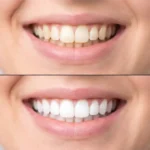

If you’re dealing with lost teeth or have already lost one or two teeth, you’ve likely got a pretty good idea of the role a “dental bridge” plays in the dental treatment process. But it’s not just a simple matter of plunking down a dental bridge; there’s a whole other step in the process called a temporary bridge that you need to know about. Understanding the difference between a temporary dental bridge and a permanent one is the first step in making an informed decision about your treatment plan and your overall dental health.
This guide will walk you through the entire process, from the materials and timeframes involved to the cost, care, and maintenance, and how they stack up against dental implants, so you can proceed with your treatment plan in confidence.
- A temporary dental bridge is a short-term solution that’ll sit on your teeth for anywhere from a few weeks to a couple of months, long enough for a dental lab to create the final restoration bridge. It’s designed to protect your prepared teeth and keep things looking decent until a permanent bridge can be made.
- A permanent dental bridge is a long-term restoration made from top-quality materials like porcelain or zirconia that can last 10 to 15 years or longer with proper care and maintenance.
- Permanent bridges not only get your functionality back to normal but also restore your smile and are shaded to look like natural teeth color. They just require a bit more prep time, planning, and a higher upfront cost than a temporary fix.
- Both temporary and permanent bridges keep your remaining teeth in place and help support your oral health after losing a tooth.
- Some people may find they’re better suited to implant-supported bridges or other tooth replacement options, depending on gum disease, bone loss, and their budget.
What is a Dental Bridge and Why Would You Have One If You’re Missing Teeth?
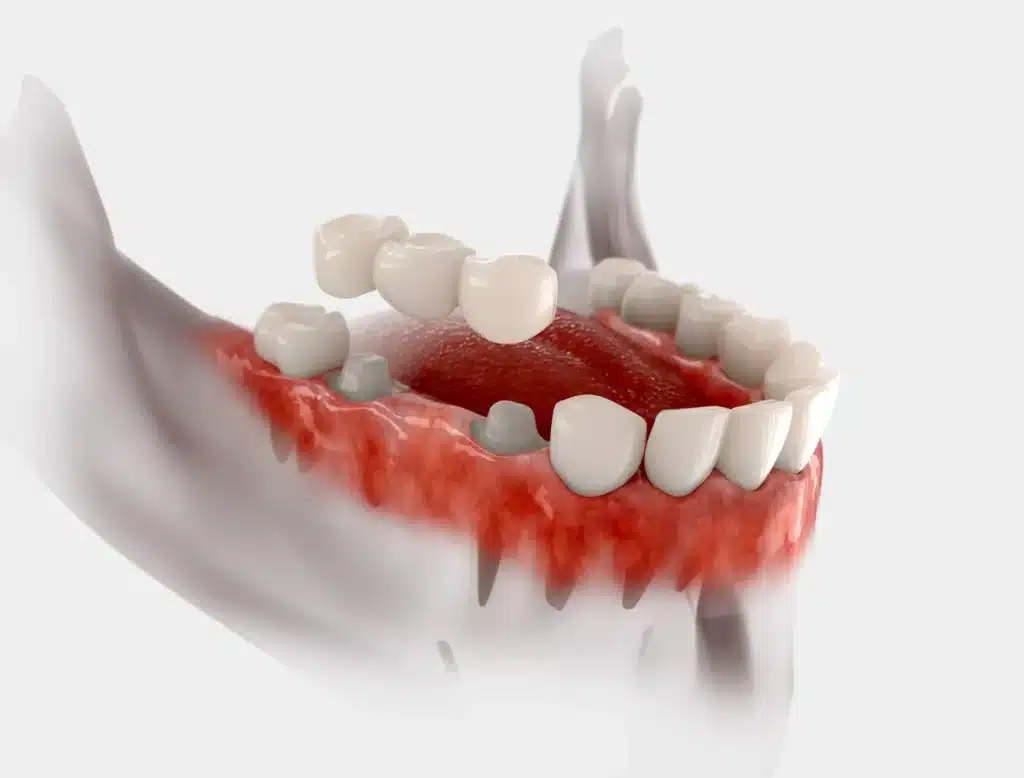
A dental bridge is a type of fixed restoration dentists use to replace missing teeth. It works by anchoring artificial teeth (or ‘pontics’) onto the neighboring teeth or dental implants, and these support teeth on either side of the gap are called ‘abutment teeth’. Then, the whole thing gets cemented into place so it can’t be removed while you sleep (or anytime, for that matter).
Bridges provide more than just an aesthetic improvement; they help you chew better & speak more clearly, restore your smile, and prevent those adjacent teeth from drifting into the gap left by your missing tooth, a process that can really mess with your bite, jaw, and overall oral health. Plus, they keep the natural shape of your face intact by stopping your lips and soft tissue from sagging due to tooth loss, which is important whether you’re in the front or the back of the mouth.
This article is all about comparing temporary and permanent bridges, so you know what to expect at each stage of the dental bridge process.
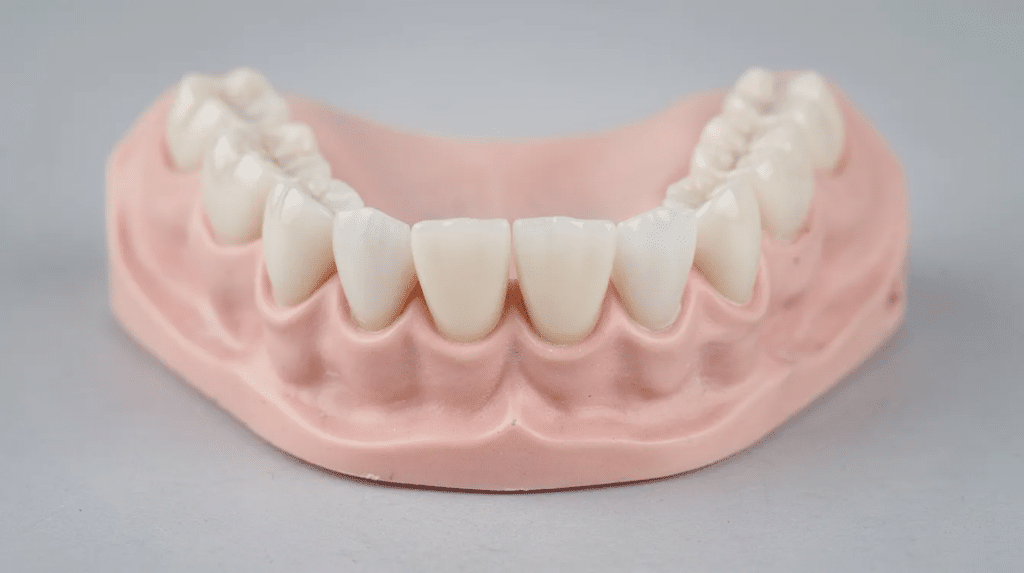
Temporary Dental Bridges: Purpose, Design, and Timeline
Temporary dental bridges are basically a stand-in while you wait for your permanent restoration. They protect the prepared teeth and healing gums, keep nearby teeth from shifting, and help you maintain a natural-looking smile in the meantime. Made from lighter materials like acrylic or composite, they’re easy for your dentist to adjust and remove when your final bridge is ready.
Most people wear them for 2 to 6 weeks, although the timeline can be longer after extractions or implant treatment. Since they’re not meant to handle heavy chewing, it’s a good idea to avoid hard or sticky foods to keep them comfortable and intact.
When Are Temporary Bridges Most Likely to be Used
- After you’ve had your abutment teeth prepared for a traditional bridge, while the lab works on the final one
- Following a tooth extraction, especially if the tooth in question was in a cosmetic zone & you need a pretty quick aesthetic fix
- During the early stages of the treatment process, to help you figure out the best approach for your permanent bridge
- While you’re deciding if a permanent bridge is the best choice for you, or if you’d be better off with an implant-supported bridge or some other tooth replacement alternative
The Pros and Cons of Temporary Dental Bridges
Temporary bridges give you a decent smile, speaking, and chewing function while your dentist makes adjustments to the real thing. Here are the main points to consider:
The Good Stuff:
- They get your smile back to normal pretty quickly after an extraction
- They protect your teeth & gums while they heal
- They keep your teeth from shifting and your bite from getting all wonky
- And they’re cheaper than a permanent bridge
The Not So Great:
- They’re pretty fragile and can break easily under stress
- They’ve got rougher edges & aren’t as precise a fit as a permanent one
- They need to be removed, which can be a bit of a pain, and are less stable than a permanent option
- And they’re not a long-term fix for missing teeth
A bit of sensitivity is normal at first, but things should get more comfortable once the permanent bridge is in place.
Permanent Dental Bridges: Long-Term Solution For Tooth Loss
Dental bridges that are here to stay are a custom-made, long-term fix for teeth that have been lost. If looked after properly, they can last many years, maintaining oral health on check. Not like the temporary ones, a permanent bridge gives you back your full chewing and aesthetic power, it can handle all the daily work of biting and chewing, and looks just like your own teeth.
Permanent bridges are made from solid materials like porcelain or ceramic, or sometimes even metal. Some are made with a special kind of metal underneath a layer of ceramic; they are strong and can handle the forces of chewing and even match the look of your real teeth. Some are made from porcelain, so they look super natural and stay looking good for years.
These bridges are custom-made to fit your surrounding teeth perfectly, in shape, colour, and size. They are fixed with strong cement, so they can’t be taken out by the patient. The only one who can put them back on is a dentist. Permanent bridges provide you with full chewing and speaking power back, and your oral health will thank you. They can last 10 to 15 years or even longer with good care.

Benefits of Permanent Dental Bridges for Your Oral Health
These bridges are not just about having a better-looking smile; permanent bridges contribute lots of health benefits, too:
- They take the pressure off the rest of your teeth when you eat
- Filling in gaps with a bridge stops food from getting stuck behind your teeth, so your gums stay healthy
- They also help keep your bone in your jaw healthy, especially if you are using implants
- They keep your other teeth in their right place, so continue maintaining proper alignment
Limitations and Risks of Permanent Bridges
No dental fix is 100% perfect; you need to know about the risks:
- To make a permanent bridge, some of the healthy bits of the teeth on either side of the gap need to be ground away, which is irreversible
- A bridge will only last as long as the teeth and gums underneath it are healthy. If you don’t take care of your teeth it will not last long.
- There are risks with any dental work, like tooth decay under a crown or a bridge getting loose or even coming off.
Temporary Dental Bridge vs Permanent: What are the Key Differences?
Both types are part of the same treatment but serve different purposes:
| Feature | Temporary Bridge | Permanent Bridge |
| Materials | Acrylic or composite materials | Porcelain, zirconia, PFM, metal alloys |
| Duration | Weeks to a few months | 10-15+ years |
| Chewing function | Basic, with dietary caution | Near-normal chewing strength |
| Fit and aesthetics | Adequate but less precise | Meticulously matched and contoured |
| Cement | Weak (easy removal) | Strong (permanent bonding) |
| Purpose | Placeholder during fabrication/healing | Final restorative solution |
Temporary bridges are part of the process of getting a dental bridge. A permanent bridge is the final answer; it is the end of your journey to replace a tooth
Comfort, Fit, and Aesthetics After a While
Temporary bridges are made and fitted quickly, but can feel a bit bulky and may cause some gum irritation at first. Permanent bridges are carefully fitted to match up with your mouth perfectly, which is especially important if it’s going in the front, where appearance is key.
Your gums will get used to the permanent bridge pretty quickly, though, and it will feel a lot more natural. Plus its a lot easier to clean!
Cost and Insurance Considerations
Temporary bridges are not so expensive; they are just part of the overall treatment and are not usually a high cost. Permanent bridges are more expensive because they use more durable materials and take more time to make and fit. A standard bridge usually costs between $2,000 and $5,000 in the US (depending on where you live and what you use), and your insurance might cover some of the cost, but you will need to check.
A permanent bridge is like an investment in your teeth; they will last a lot longer than a temporary one, and you won’t have to keep going back to the dentist to have it fixed.
Bridge vs Implant: How Do Permanent Bridges Compare to Dental Implants
Both bridges and implants are long-term solutions for teeth that are missing, but they work in different ways. A bridge relies on the teeth on either side of the gap for support, which means they need to be chipped down a bit. An implant is a metal post that goes into the jawbone and supports a permanent crown or a bridge. It keeps the bone healthy and stops it from shrinking away.
Implants are a bit more complicated than bridges and take a bit longer, sometimes a few months. A bridge can usually be fitted in a few weeks. The best choice is usually based on the bone quality in your jaw, if you have gum disease, your overall health, how many teeth are missing, and how much it costs.
When a Bridge Might be Preferred
- If the teeth on either side of the gap are going to be crowned anyway
- You don’t want to go to the dentist for surgery, or you aren’t a good candidate.
- You don’t have enough bone for an implant, and you don’t want to do grafting.
- You need a fast fix after you have lost a tooth
- You are young and want to delay the implant in your jaw until it is ready
When Implants Might be Preferred
- You are missing just one tooth, and the rest are still healthy
- You are not happy with the idea of chewing down healthy teeth for a bridge
- Your jawbone is healthy and strong, and you are a good candidate
- You want an implant to replace a tooth that you have lost
- Larger gaps, where long-span traditional bridges would be a bit of a gamble
- Significant worry about bone loss down the line
- Implant-supported bridges are good for replacing multiple missing teeth with fewer implants, which is a big plus for long-term oral health.
- Upfront costs can be steep, but in the long run, maintenance costs are likely lower.
Types of Dental Bridges (and Their Temporary Counterparts): What are They Exactly?
“Dental bridges” is a general term that covers various types. The specific type, traditional, cantilever, Maryland, or implant-supported, affects not only the temporary restoration but also how the final product is designed. Usually, your dentist will choose one that mimics the planned shape of the final design, in order to make it look like natural teeth, even if it’s not the same material. The decision is made based on your oral health needs, like the number of missing teeth, their location, how much pressure they’ll be under, and the condition of the teeth next to the gap.
Traditional Fixed Bridges
Traditional bridges are still the most common type: two or more crowns on the teeth on either side of the gap, with one or more pontics in between, a tried and true approach. Both temporary and permanent versions are created after the teeth on either side have been reshaped and impressions have been taken. They’re a good choice for replacing one to three missing teeth in a row if the teeth on either side are healthy enough to support them.
Cantilever Bridges
A cantilever bridge is held up by only one side of the gap, and that’s usually the case when there’s only one tooth left to support it. They’re not really recommended in high-stress areas because the tooth that’s doing the supporting is put under a lot of strain. Temporary cantilever bridges can be put in to check that everything feels right and works properly, before the permanent one is made.
Maryland (Resin-Bonded) Bridges
Maryland bridges are a more conservative option that’s often used for front teeth. They use a framework that a dentist bonds to the back of the teeth, either side of the gap, but they require less tooth reduction, which makes them a good choice for younger patients or anyone who wants to preserve the enamel on their teeth. However, they don’t last as long as other types; their lifespan is usually around 5 to 10 years because they can become unstuck. The temporary restorations for Maryland bridges may be a bit simpler while the lab gets to work on the precise framework.
Implant-Supported Bridges
Implant-supported bridges are held up by dental implants rather than natural teeth, which makes them especially useful if several teeth next to each other are missing. Implant-supported bridges can provide a strong base using dental implants rather than relying on other teeth. Temporary solutions during the healing process may involve a removable partial denture or a temporary fixed bridge attached to provisional implants. They’ve got a few big advantages: you don’t need to drill into the teeth next to the gap, they’re more stable, and they can even help support the bone in your jaw.
Caring for Temporary vs Permanent Dental Bridges: What Do I Need to Do?
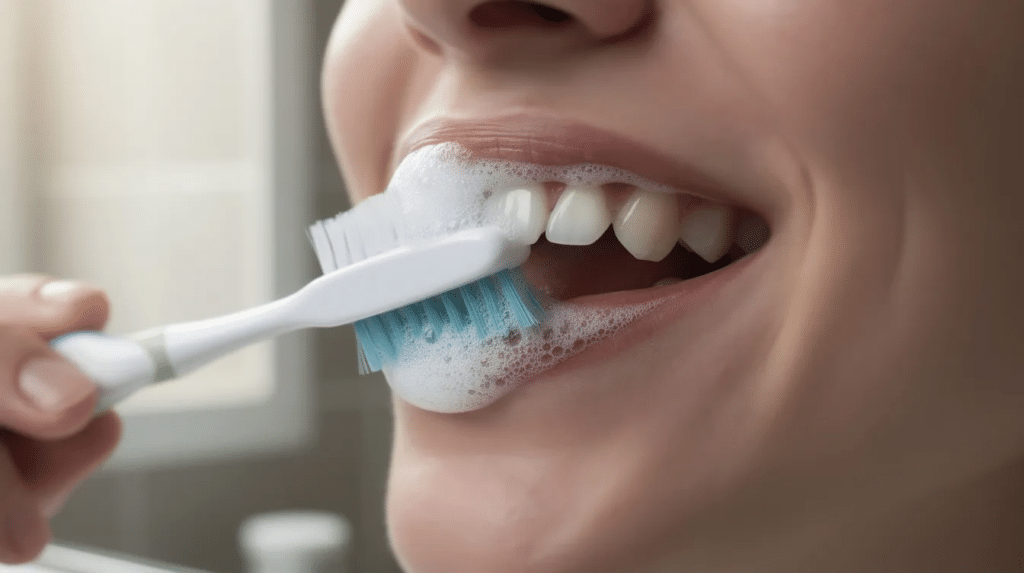
Temporary and permanent bridges both need consistent dental care and good oral hygiene, but the daily routine and precautions are slightly different. Good plaque control is key to preventing decay of the teeth next to the gap and gum disease, which can both shorten the lifespan of any restoration.
While You’ve Got a Temporary Dental Bridge In
- Be gentle when brushing around the temporary bridge, especially at the edges.
- When you’re flossing, slide the floss out sideways rather than snapping it up and down, to reduce the risk of knocking the bridge out.
- Avoid hard or sticky foods to prevent damaging the bridges; skip hard nuts, ice, sticky caramels, and chewy candy.
- It’s common to feel a bit sensitive to hot and cold and some pressure, but if you’re in pain or feeling like the bridge is loose, call your dentist.
- Keep your regular appointments at the dental office so you can move on to your permanent bridge as quickly as possible.
Long-Term Care of a Permanent Dental Bridge
Looking after a permanent bridge is similar to maintaining your natural teeth, but there are a few extra things to be mindful of:
- Regular brushing, at least twice a day, using fluoride toothpaste, paying particular attention to the gumline where the bridge meets the prepared teeth, to prevent decay
- Floss around the bridges using floss threaders or specialized bridge floss to clean under the pontic and around the abutment teeth to prevent decay.
- Make sure you’re cleaning and flossing a bridge properly to prevent gum disease.
- Try to limit habits that can damage a bridge: chewing ice, biting your fingernails, or using your teeth to open packages, and consider a night guard if you grind or clench your teeth at night.
- Regular dental check-ups will help catch any issues early with the bridge. Aim to see your dentist every 6 months so they can check the bridge for wear, make sure the bite is still okay, and look out for signs of bone loss or decay.
How Long Do Temporary and Permanent Dental Bridges Last? The Bottom Line
It really does depend on the materials used, how well you look after them, how much pressure they’re under, and the health of your teeth and gums.
Temporary bridges usually last from a few weeks to a few months, but in some cases, they can last up to a year. Wearing a temporary bridge for longer than planned increases the risk of it breaking, coming loose, and your teeth moving out of place.
Crowns and bridges can last 10 to 15 years with proper care, and some can even last 20 years or more if you look after them really well. Implant-supported bridges often last 15 to 20 years, while Maryland bridges average 5 to 10 years. Factors that can shorten your lifespan include smoking, uncontrolled diabetes, untreated gum inflammation, not brushing and flossing as often as you should, and skipping dental appointments.
Your permanent bridge is a significant investment; treat it right with proper care and maintenance, and you should be able to enjoy many years of reliable chewing function along with a noticeable aesthetic boost.
Choosing Between Temporary & Permanent Bridge Strategies in Your Treatment Plan
This isn’t about choosing one over the other. Often, patients need a combination of both, a temporary bridge while they heal or while the permanent one is being fabricated. So the real question is how long to stick with each one, and which long-term tooth replacement strategy is going to work best for you.
Some patients delay getting a permanent bridge due to financial concerns or health issues, and just end up sticking with “long-term temporaries,” which can be a bit of a gamble; you’re looking at wear & tear, fractures, gum irritation, even decay starting to develop underneath the temporary. If you’ve been wearing a temporary longer than planned, get in touch with your dentist to figure out what to do next.
Usually, treatment sequencing means addressing any gum disease or cavities first, then doing any extractions that are necessary, then putting in some temporaries, before finally doing the permanent restorations once your oral health is on even keel.
The key is having an open and honest conversation with your dentist about what you’re looking for: do you want a traditional bridge, an implant-supported bridge, or something else entirely? Good, clear communication about budget, time constraints, and the sort of cosmetic result you’re looking for will really help the dental team to design a realistic plan that works for you. And don’t forget to go to your regular check-ups with the dentist regularly to keep the whole thing on track.
Getting A Bridge At Dental Algodones
Before choosing a temporary or permanent dental bridge, it’s important to have a team that can guide you through every stage of treatment. At Dental Algodones, our patients receive personalised care tailored to their needs, whether they need a short-term bridge while healing or a long-lasting solution to replace missing teeth.
Using exclusively high-quality materials and modern techniques, our experienced team creates restorations designed to restore your smile, improve chewing and speech, and help prevent nearby teeth from shifting out of place. From temporary bridges that protect your teeth and gums during treatment to durable, permanent, and implant-supported bridges built to last for years, at DA, we offer comprehensive options that prioritize comfort, function, and natural-looking results, making us an excellent choice to get a new, confident smile.
Frequently Asked Questions
Can I just use a temporary dental bridge as my new normal for the long term?
Temporary bridges are really only designed to last for a short period of time. Wearing one for too long increases the risk of it cracking or falling apart, or even gum irritation and your teeth moving, so if your temporary has been in place for longer than a few months, it’s probably time to get it looked at and have a chat about moving on to a more permanent solution.
Is the temporary or permanent dental bridge procedure painful?
The dental bridge procedure is usually done under local anesthesia, so you might feel some pressure but not pain during the tooth prep and placement. Some post-procedure sensitivity or mild soreness is pretty normal for a few days afterwards and can usually be sorted out with some over-the-counter painkillers. But if you’re experiencing persistent or severe pain, or anything that feels like a root canal complication, you should give your dentist a shout.
What do I do if my temporary bridge comes off while I’m at home?
Hang onto the bridge piece, try not to chew with that side, and get in touch with your dentist ASAP for a re-cementation. Don’t even think about trying to glue it back in yourself with some supermarket adhesive, which can cause a whole host of problems with your teeth and gums, or even mess up the fit of the eventual permanent bridge.
Will a permanent dental bridge change the way I speak or eat?
Some patients notice a tiny bit of a difference in pronunciation or normal chewing for the first few days, especially if the bridge is for a front tooth, but most people adapt pretty quickly. With a permanent bridge, you should be able to chew normally without any issues, and many patients find that they can talk and eat even more easily compared with when they had a missing tooth.
How do I know if I’m better off with a dental bridge or dental implants?
The decision really comes down to your individual needs, number and location of missing teeth, bone density, gum health, overall health, and whether you’re up for having surgery. Get a comprehensive exam, including any X-rays or imaging that your dentist thinks you need, and they’ll be able to walk you through the pros and cons of each option for your specific situation.