You are at that point in life in which you need to replace missing teeth, so you’re looking for dentures that just “feel right” and don’t give you a second thought when you’re eating, then you’re probably getting a little fed up with all the options out there. We get it, the internet can be an overwhelming place, and suddenly you’re trying to compare ten different versions of the same thing.
The truth is, all dentures are considered artificial teeth, and most types of dentures fall into a pretty simple few categories. Once you know which one best fits your mouth, your timeline, and your comfort level, things get a lot easier. And if you’re planning to get your dentures done in a dental destination like Los Algos, then that’s a big plus.
The Complete Guide to Different Types of Dentures
You’ve got five main types of dentures: full, partial, immediate, snap-in, and fixed. Modern dentures can be customized with high-density, stain-resistant materials. Then, there are implants, which can be a bit confusing because “dental implant-retained” and “implant-supported” sound a lot alike, but they behave differently in real life.
Here’s a comparison of denture categories:
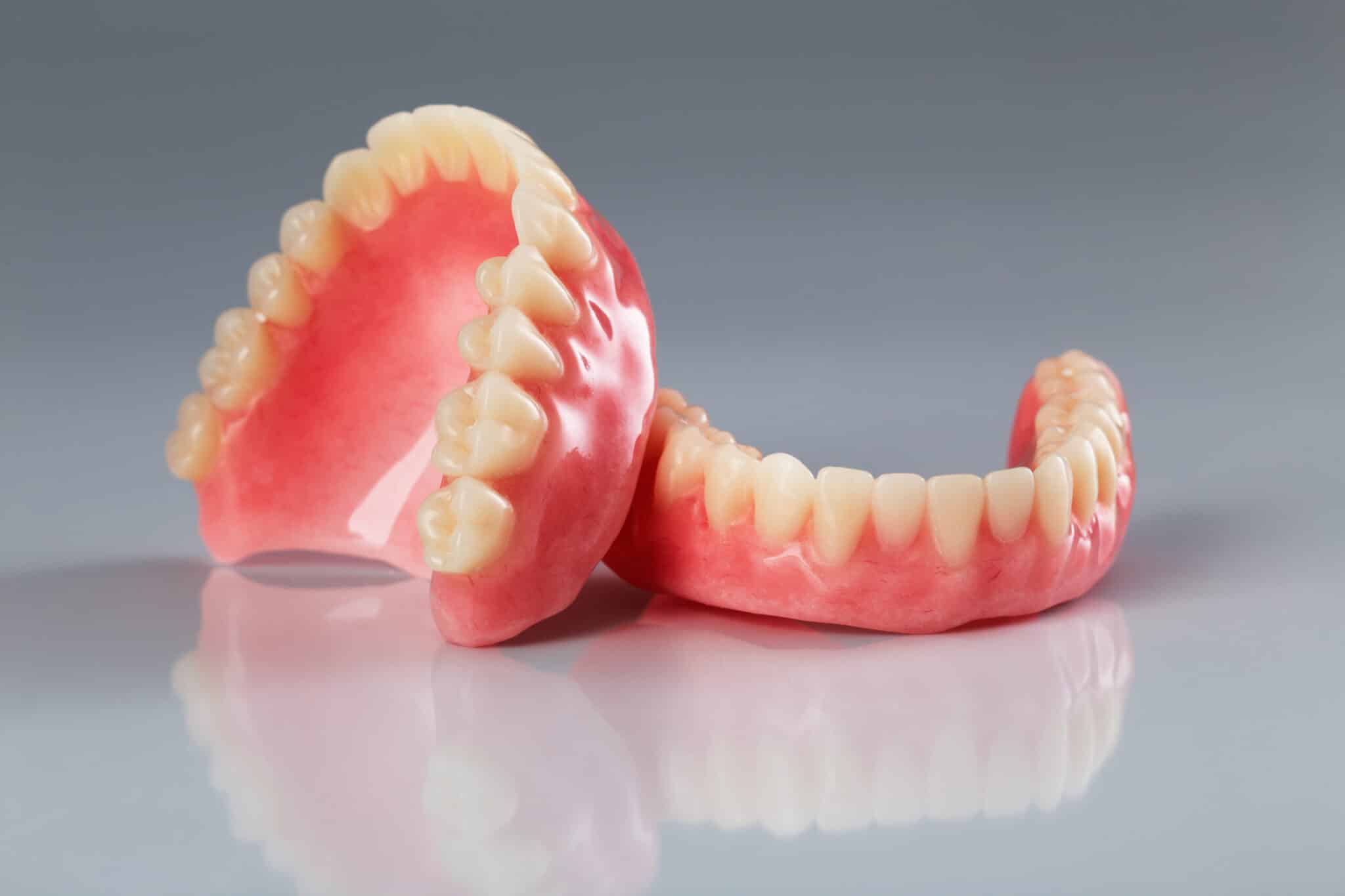
Full dentures for the whole smile: These are traditional dentures, a removable replacement for all your teeth in an upper or lower jaw arch.
Partial dentures for the gaps: A removable replacement for just some of your teeth, while leaving your healthy natural teeth in place.
Immediate dentures to see you through: Temporary teeth that are placed right after extractions (just be aware the fit will change as you heal).
Snap-in dentures that pop on and off: A removable denture that snaps onto implants for a bit more stability.
Fixed implant dentures that stay put: These are considered permanent dentures, so they aren’t something you can take out at home; your dentist needs to remove them for maintenance and check-ups. But they do come with their own special hygiene routine.
So, in a nutshell: snap-in dentures are removable for cleaning at home, while fixed implant dentures are there to stay. Both can be great options. The “best” one just depends on how you live your life.
Complete dentures
Full dentures replace all your teeth in the top, bottom, or both arches. They rest on your gums and are usually removable. If you’ve never worn dentures before, be prepared for a bit of a learning curve and a few adjustments as your mouth gets used to the new feel.
One thing that gets lost in the translation: lower dentures are notoriously harder to get used to than upper ones. The upper denture gets to use the palate for suction, while the lower has less surface area and more tongue movement to deal with.
What full dentures are like day-to-day
You might find yourself using adhesive at times, especially early on or with the lower arch. Speech can feel a bit odd at first, and chewing improves as you get the hang of distributing pressure on both sides.
When it comes down to it, the “success” of full dentures really comes down to your expectations. They can look great and function well, but they’re not going to behave exactly like your own teeth.
Partial dentures
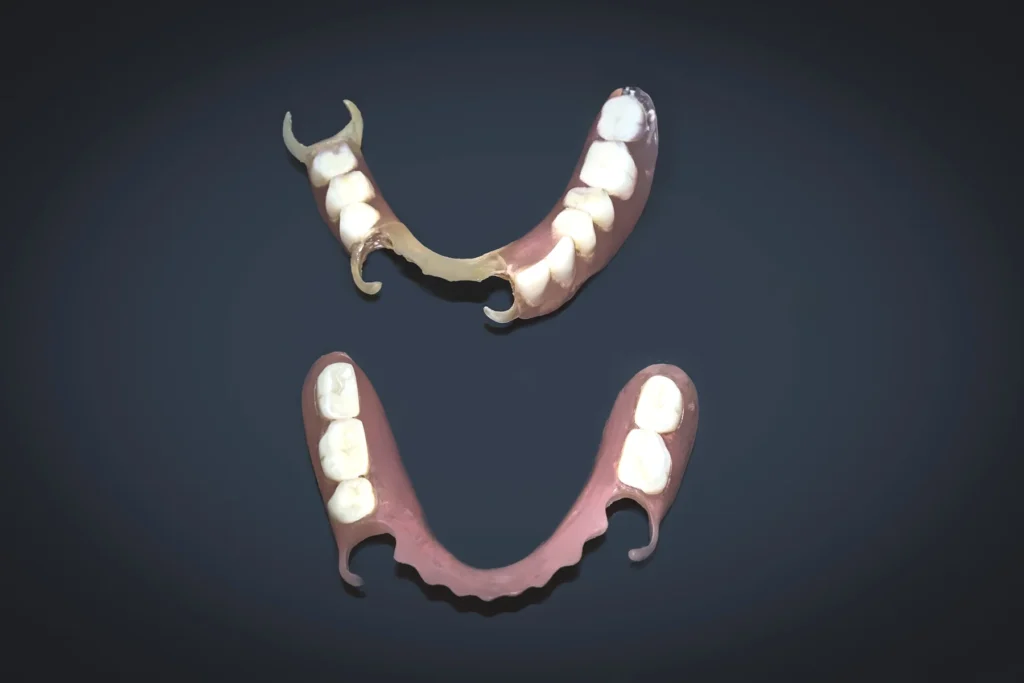
Partial dentures replace one or several teeth while keeping your remaining natural teeth in place. They can also help keep nearby teeth from shifting into the gaps.
A partial denture is often the way to go when you want a removable option, when you’ve got gaps in different areas, or when a fixed bridge would mean reshaping healthy teeth.
Common partial denture styles
Acrylic partials (also known as “flippers”) are often more temporary. They’re commonly used for a short-term cosmetic fix while you recover or figure out your next move.
Partial metal dentures, often made with cobalt chrome, are durable but have poorer aesthetics due to their noticeable color. They tend to use a thin metal structure with clasps or attachments that hook onto your remaining teeth.
Porcelain dentures are more durable than acrylic and provide excellent aesthetics, closely resembling natural teeth, while
Flexible dentures
Flexible dentures are made from thinner, more flexible materials, providing a comfortable fit and reducing sore spots on the gums. It can be a lot more comfortable for some people. They might look more natural around the gumline because the material blends in better, but they’re not always the best option for everyone, and repairs can vary.
One rule of thumb: if you want something super long-lasting and very stable, a metal-framework partial is often worth talking about. If you want a lighter feel and a more natural look, then flexible might be the way to go – your dentist should explain the tradeoffs.
Immediate dentures
Immediate dentures are made ahead of time and placed right after your teeth are removed. The big plus is that you don’t have to go without teeth during the healing process.
But immediate dentures come with a catch: your gums and bone will change shape after extractions. That means the fit you start with won’t be the same as the fit you’ll have later.
What to expect with immediate dentures
In the first few weeks, you might need a few adjustments for sore spots. As the swelling goes down and tissues start to remodel, the denture may loosen, so you might need to get it relined.
Immediate dentures can be a great bridge, but they’re rarely the final destination.
What Dentists Check for at Your Denture Consultation
If you’re not sure where you fit, focus on these five factors. They’re what guide a real treatment plan, whether you’re getting seen locally or traveling for care.
When you’re trying to decide between dentures and implants, a few things come into play. First, how many missing teeth do you have? That’ll tell you whether a partial or a full-arch solution makes more sense. Your gum health and bone support matter a lot, too. Over time, changes in your tissue and bone can affect how well everything fits and holds up.
Another big thing is how you feel about movement. Some people get used to a little shifting with dentures, but others really want something that stays completely put. Also, think about timing and travel. If you’re planning to get care somewhere away from home, keep in mind that dentures usually mean fewer visits than implants do.
Finally, there’s daily cleaning and comfort. Removable and fixed options come with their own routines and lifestyle trade-offs. Neither is necessarily easier; it’s more about what fits your day-to-day life.
One thing to keep in mind here: choose the type of denture you want – & then you’ll be able to start talking about the specifics with your dentist.
Snap-in Dental Implant Dentures
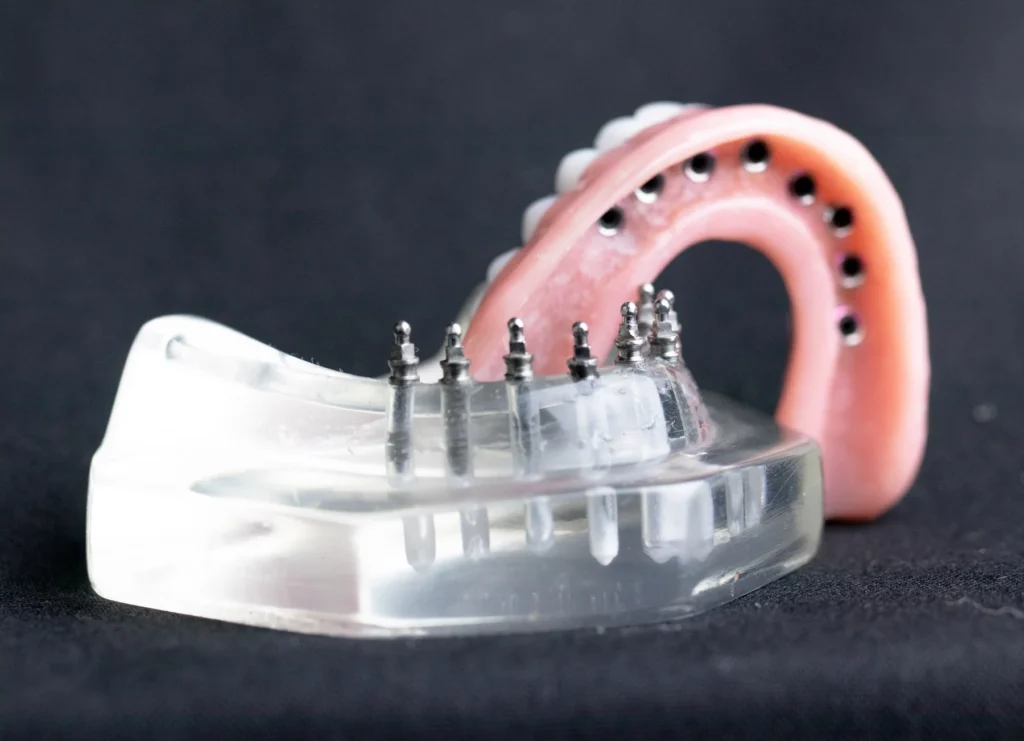
Snap-in dentures sort of sit in the middle of “traditional removable” & “fully fixed”. Your denture can still be taken out for cleaning, but it’s anchored to implants instead of just relying on suction & gum support.
When a snap-in is in, it clicks into place using attachments. You clean them like a normal denture, but when you put them in, they snap into place.
Who Snap-in Dentures Tend To Fit Best
If you want a bit more stability but still want to be able to take your denture out at night, snap-ins might be the way to go. They can also be a good option if you’ve had trouble with a lower denture moving around.
A note here: the attachments that help make them snap into place do have a tendency to wear out over time. Don’t worry – that’s just part of routine maintenance.
Maintenance Reality
For a snap-in, you’ll be doing your daily cleaning of the denture & the areas around the implants. You’ll also need to replace the worn-out attachment parts now & then, & get check-ups to make sure the fit & bite stay balanced. & to keep those attachment parts replaced.
If you like being able to take your denture out & clean it, snap-ins can be a really good fit.
The difference between Implant Retained Dentures and Fixed Dentures
With fixed implant dentures, you don’t take them out. Your dentist removes them now & then for some deeper cleaning & to check the fit.
Now, here’s where things can get a bit confusing online: implant-retained usually means you can take them out (snap-in), implant-supported usually means they stay in place (a full-arch restoration).
Where All-on-4 Fits
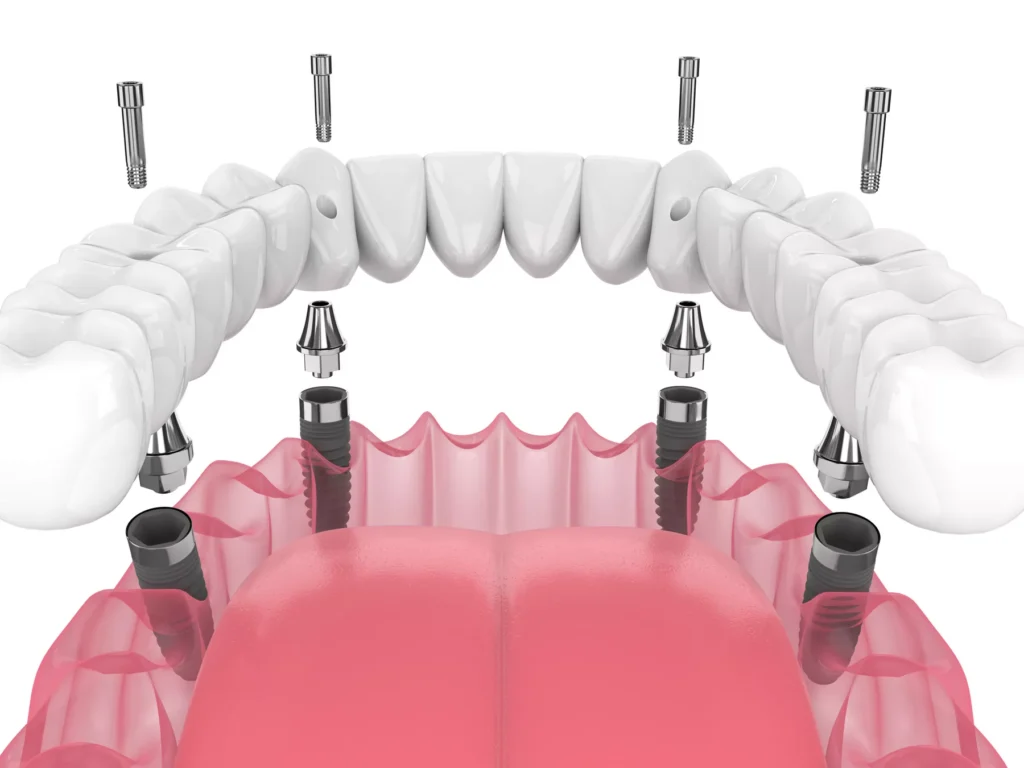
All-on-4 is a full-arch restoration that uses strategically placed implants to support a set of teeth. It’s basically a pathway to a fixed implant denture.
Who Fixed Options Tend To Fit Best
If you want the maximum amount of stay-in-place confidence – when you’re eating or speaking – fixed options might be the way to go. They can also be a good fit if you prefer a solution that feels like your natural teeth.
Just remember: fixed doesn’t mean zero maintenance. It means a different kind of maintenance & a different cleaning routine.
Materials & Build Quality
When you’re comparing dentures, it’s easy to get caught up in the label. But the truth is, it’s fit & the build quality that really matter.
For removable dentures, you’ll want to ask about the base & teeth – & what kind of repairs you’re likely to need. The same goes for the replacement cycle.
For fixed full-arch options, keep talking about outcomes & ask how the bite is going to be verified before they give you your final set. Ask about any early adjustments you might need to make – & what the plan is for teaching you how to take care of them properly.
What Affects Dentures Costs
The cost of dentures goes up because they’re not just one thing; they’re a whole plan. And the cost is influenced by what needs to happen before, during & after the denture is made, also costs may be higher at out-of-network dental offices compared to in-network offices due to different fee schedules.
Common Cost Drivers
- Extractions & Bone Smoothing: Some procedures that need to happen before a denture can even be fitted.
- Immediate Dentures During Healing: Temporary teeth while your tissues change shape.
- Relines & Follow-up Adjustments: Ongoing fit updates as your mouth remodels.
- Implants & Components: Surgical placement & all the hardware that goes along with it.
Choosing Dentures in Los Algodones

If you’re coming from the States or Canada, you might have heard of Los Algodones – it’s a border town built around cross-border dental care. & that can make the logistics a lot simpler for a lot of patients.
At Dental Algodones, we start with a Free Virtual Diagnostic to help you narrow down your options & get a better idea of what you can expect & when. Then we finalize the plan after an in-person exam & some imaging.
What’s the Most Comfortable Type of Denture?
Comfort is usually the one thing that’s not quite right – and it’s rarely about the label, but more about the fit. Loads of people find that implant-retained dentures (the snap-in kind) are heaps more comfy, especially when you’re using them on the bottom jaw – because they move a lot less.
Are snap-in dentures basically the same as implant-supported dentures?
Well, no – snap-ins are usually the ones you can just take out yourself when you need to, and they “click” onto the implants. Implant-supported fixed dentures, on the other hand, stay put and will need to be taken out by a dentist when you need them to be serviced.
Can you get temporary teeth the same day as the extractions?
Most of the time, Immediate dentures can be put in straight away & after the extractions. The thing is, your mouth then goes & changes shape a bit, so you’ll need to pop back in for some follow-ups and probably some adjustments to get it all just right.
How long do dentures last?
It all comes down to what you’ve got them made of, how hard you bite down, and how well you look after them. Even if the denture itself lasts a good amount of time, you might find that the way it fits changes over time, so getting them re-lined or adjusted every now & then is pretty normal.
Do bottom dentures just slip all the time?
They’re probably going to move a bit more than the top ones because there’s less surface area to work with, and you’ve got the tongue flying around in there. To be honest, a really precise fit will help, and for loads of people, implants can be a game-changer in terms of stability.
Get Your Free Quote
So, you’re trying to decide between full dentures, partial dentures, snap-ins, or maybe something a bit more fixed up. The smartest way to stop wondering what to do is to get a treatment plan drawn up that’s all about your mouth, your schedule, and how you feel.
Get Your Free Quote at Dental Algodones and ask about the Free Virtual Diagnostic, travel plans, and shuttle support so you can get your head around your Los Algodones visit and plan it all out with a bit more clarity.